What to Pack for a Winter Trip to Lapland | Lapland Packing List
Lapland-proof, not just “winter cute”
Lapland winter is a whole different league compared to a regular cold-weather trip. Think: long days outdoors, deep snow, freezing temperatures, and activities like Northern Lights tours, husky safaris, snowmobiling, and winter walks that last hours.
Here’s my a realistic, warm, Lapland-tested packing list, based on comfort first (always), with style as a close second.
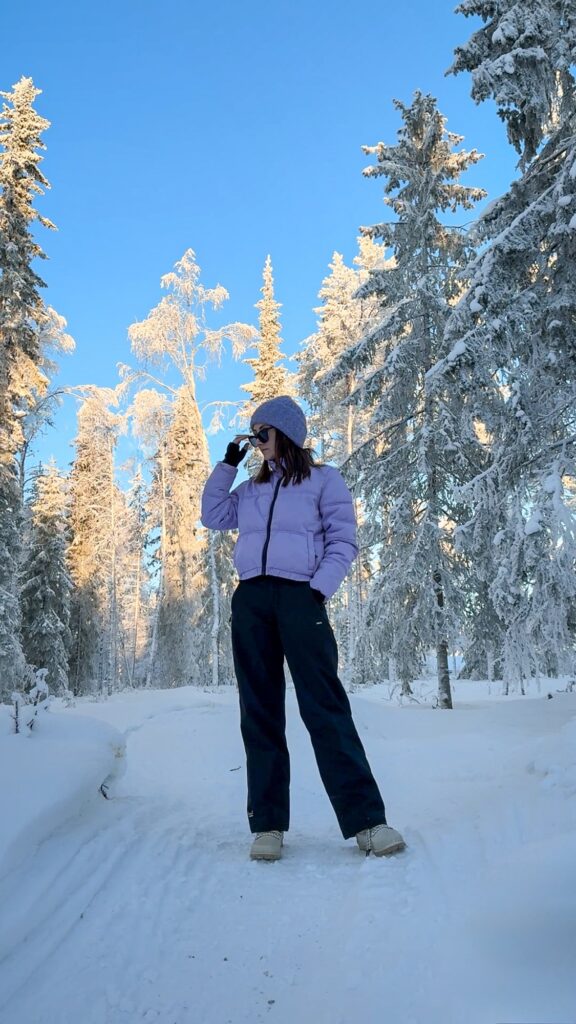
Layering Is Everything
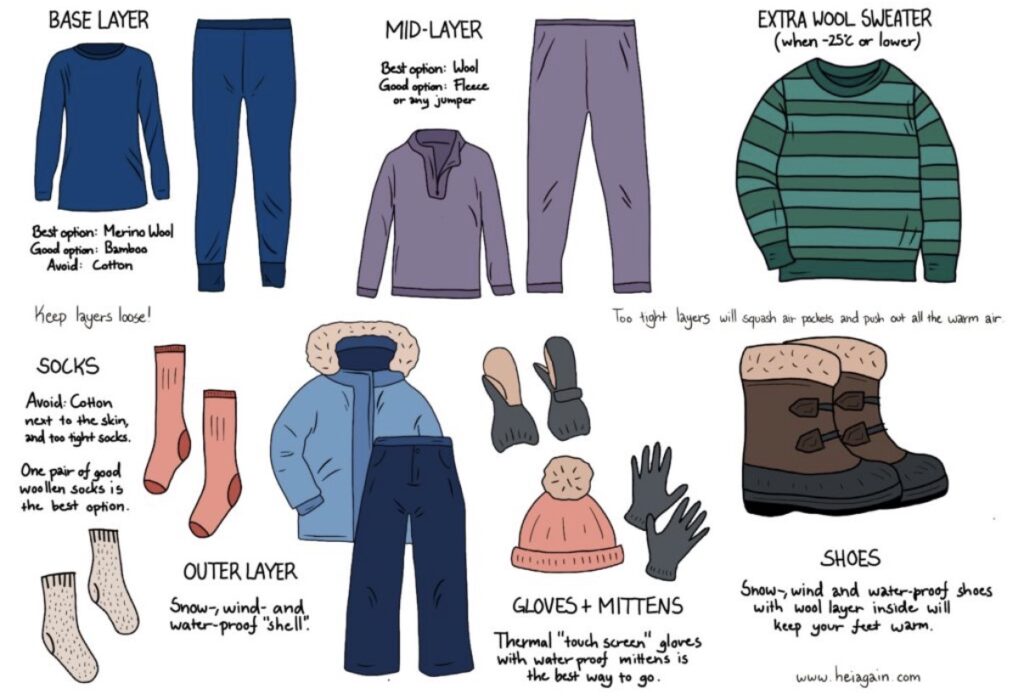
When it comes to what to wear in Lapland in winter, staying warm is rarely about one single item. In most cases, people get cold because they didn’t layer properly, not because their jacket wasn’t warm enough.
Lapland’s conditions require a smart layering system that traps heat, blocks wind, and allows moisture to escape.
Your outfit should work like this:
Base layer -> insulating layer -> outer shell
You’ll constantly move between very cold outdoor conditions and warm indoor spaces, so removable layers are essential. Overdressing is a common mistake. Sweating in cold conditions is actually dangerous, as moisture cools the body quickly once you step back outside. The goal is to stay comfortable and warm, not overheated or freezing. Read more about layering for winter in Lapland here.
Outerwear
(This Is Not the Place to Compromise)
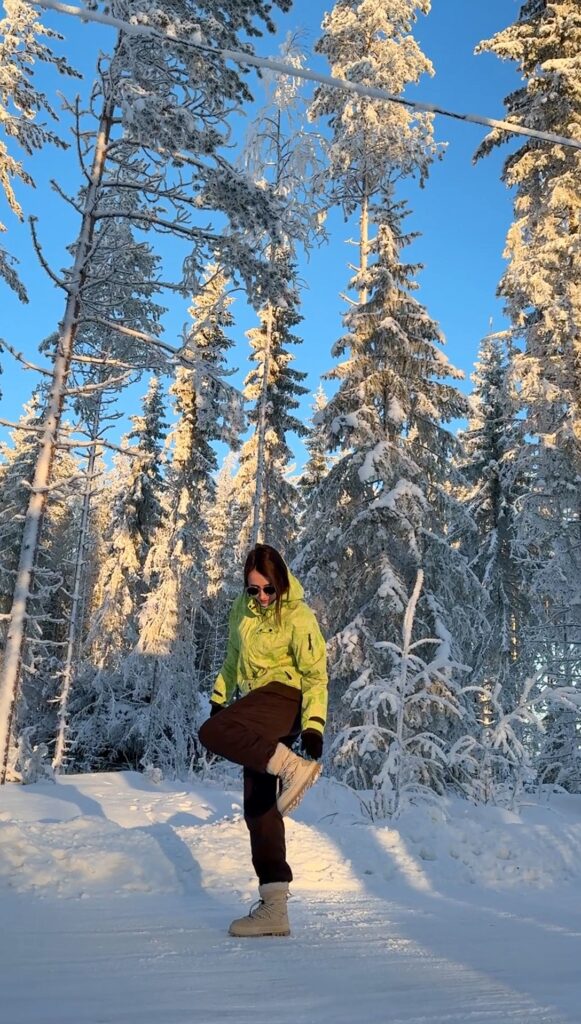
1. Heavy Winter Coat / Parka
A proper winter parka is non-negotiable. Look for:
- Insulated (down or high-quality synthetic)
- Windproof
- Hood
Tip for kids: choose coats with easy zippers and simple fastenings and long enough to cover lower back even when playing around. Jumpsuits are also good, but I have found it easier to have pants + jacket combo when moving inside and outside all the time.
Good to know: You don’t always need to buy full winter gear for a Lapland trip. Winter clothing rental services are widely available across Lapland and can be a cost-effective and convenient option.
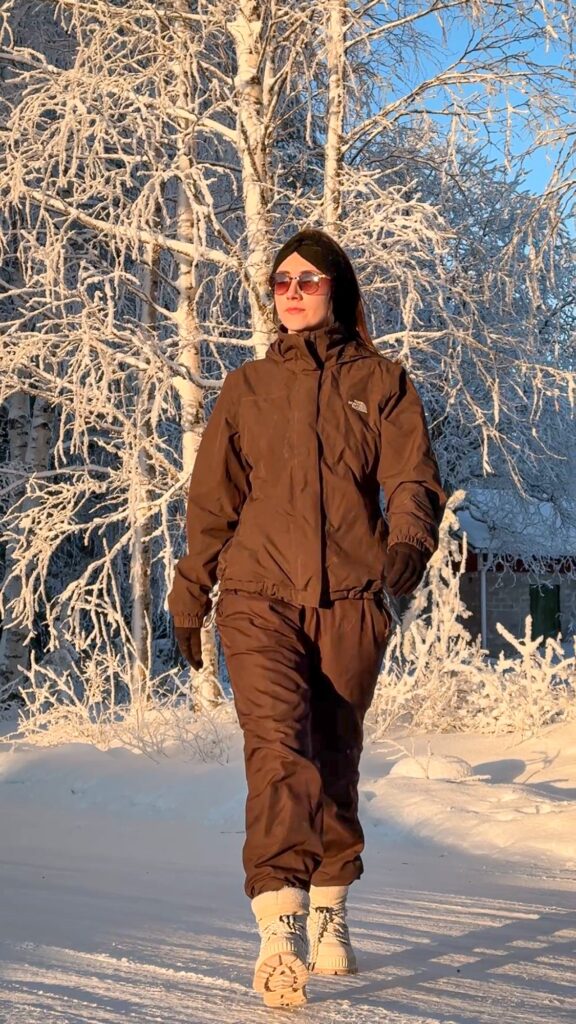
2. Outdoor Pants
(Snow Pants or Insulated Pants)
If you’re doing activities, jeans won’t cut it.
- Insulated or shell pants you can layer under
- Waterproof & windproof
HOX! Many tour companies and accommodations provide outer suits.
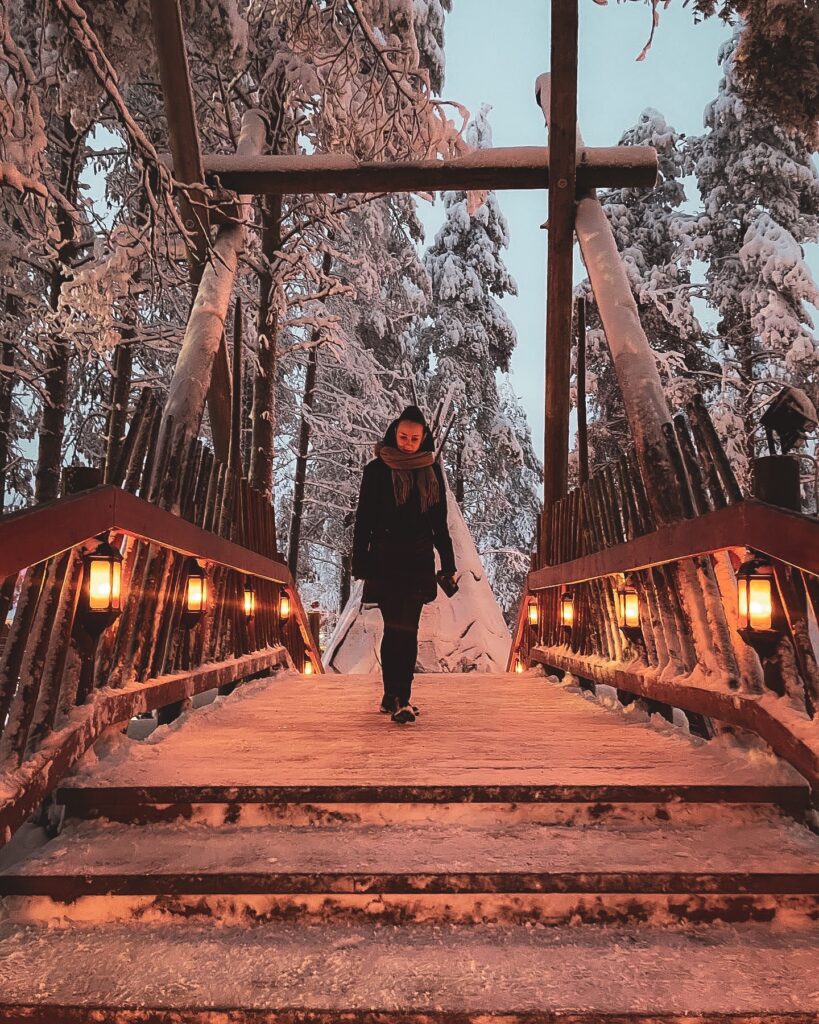
3. Optional: Stylish Winter Coat
Stylish winter coat is useful for dinners, city walks, and hotel evenings. It’s not essential, but a nice extra if you have space in your suitcase.
Lapland isn’t always extremely cold. On milder winter days (around –10°C), a lighter winter coat combined with proper thermal base layers is often enough, as long as you’re not spending the entire day outdoors.
Mid Layers
4. Sweaters
Oversized, comfy sweaters are perfect for Lapland, especially for evenings and layering.
- Neutral colors: beige, grey, black, dark green
- Add 1–2 richer tones like purple for those pastel color photos
Wool or wool blends > cotton.
5. Fleece Layers / Fleece Pullover
Fleece is gold in Lapland:
- Lightweight but warm
- Perfect under a parka or activity suit
- Easy to remove indoors
Base Layers
6. Thermal Tops & Bottoms
Absolutely essential!
- Wear under jeans, sweatpants, outdoor pants, or sweaters
- Merino wool is the best (warm, breathable, doesn’t smell). Synthetic fabrics like polyester can also work, just avoid cotton.
8. Fleece-Lined Leggings
Lifesavers!
Ideal for travel days and casual exploring in the city.
- A lot warmer than normal leggings
- Wear under pants or with long sweaters/ jackets
- Fleece-lined leggings work well on their own for city walks, but they’re not suitable as the only layer for spending a full day outdoors in Lapland’s winter conditions.
Pants
The key is choosing pants made from thicker material with a relaxed fit, allowing enough space between the thermal base layer and the outer pants for insulating air. Pants that are too tight, regardless of the material, restrict airflow and reduce insulation, which can actually make you feel colder in Lapland’s winter conditions.
9. Denim
Good for city use and evenings, with thermal layers underneath! Denim is very cold material on it’s own.
10. Sweatpants
Thick sweatpant toimii lapissa mainiosti. Alle hyvät thermal layers ja päälle paksut sweatpantsit suojaamaan tuulelta.
Accessories
11. Beanies / Headband
Heat escapes from your head fast. Always pack at least two.
12. Chunky Scarf
Wool or thick knit. Doubles as face protection in wind.
Tip for kids: neck warmers are safer and easier than scarves.
13. Winter Gloves or Mittens
- Insulated
- Windproof
- Touchscreen-compatible = bonus
Tip for kids: mittens are warmer than gloves. Bring extra pairs.
14. Wool Socks
Do not underestimate socks.
- Thick wool only
- Moisture-wicking
- More than one pair
Shoes
15. Waterproof Winter Boots
Your most important item after your coat.
- Waterproof
- Insulated
- Tarpeeksi väljät että villasukat mahtuvat hyvin alle.
Extras You’ll Be Glad You Packed
16. Swimsuit
Saunas, hot tubs, spas, and sometimes even outdoor hot pools.
Finland is the home of the sauna, and many hotels and accommodations offer saunas, spa facilities, swimming pools, or outdoor hot tubs, so packing a swimsuit is a must, even in winter.
17. Sunglasses
Yes, sunglasses.
From mid-January onwards, the sun combined with snow reflection can be surprisingly intense.
Helpful for both adults and kids.
Protective glasses are also highly recommended for winter activities such as husky safaris or as they shield your eyes from blowing snow, ice, and other debris kicked up during the ride.
18. Headlamp and / or torch
If you’re staying outside a city or village area with limited street lighting or plan to explore beyond well-lit areas in the evening, headlamp is a must-have in Lapland. Never rely solely on your phone’s flashlight when heading into nature, as phone batteries drain extremely fast in freezing temperatures. A proper headlamp or torch is safer and more reliable.
19. Portable charger
As mentioned earlier, phone batteries drain extremely fast in Lapland’s freezing temperatures. Keep both your phone and portable charger close to your body heat or stored in a well-insulated pocket. Simple trick is to wrap your phone in a wool sock before placing it in your pocket. It helps protect the battery from the cold and extends usage time during winter outings.
20. Water bottle / Thermos
Tap water in Finland is exceptionally clean and safe to drink, so there’s no need to buy bottled water during your trip. Bring a reusable water bottle that you can easily refill from any tap.
Thermos is also a great addition for day trips in Lapland. Bringing hot coffee, tea, or hot chocolate with you helps you stay warm during outdoor activities and saves a lot of money along the way.
21. Chapstick and moisturiser
- The air in Lapland is very dry. It is very recommended to pack some moisturiser.
- Bear in mind to take lip care that won’t freeze in colder temperatures such as squeeze bottles. Or keep it in a pocket close to the body to prevent it from freezing.
22. Reflective patches or armbands
Winter in Lapland means very limited daylight, and outside city centers or ski resorts, streets and roads can be extremely dark. Never walk or move around in traffic without being visible to drivers.
Roads are often icy or snow-covered throughout the winter, which reduces both braking distance and visibility. Wearing reflective patches or armbands helps ensure that you can be clearly seen as a pedestrian.