Northern Lights Hunting in Finnish Lapland – When, Where & How to See Auroras
Seeing the Northern Lights is one of the top reasons travelers head to Finnish Lapland. Between September and April, the long nights offer great chances to spot this natural wonder, but there are a few things to keep in mind before you start your “aurora hunt.”
Quick facts: Northern Lights hunting in Lapland
- Dressing warmly is crucial, especially on clear winter nights
- Northern Lights season in Lapland runs from September to April
- Best viewing hours are usually between 9 p.m. and 2 a.m.
- Auroras require dark, cloudless skies. Snowfall and rain block visibility
- Northern Lapland can see auroras up to 200 nights per year in clear conditions
- Autumn and spring are often more active than mid-winter due to clouds
- Auroras are local and can appear just a few kilometres away
- No Northern Lights sighting is ever guaranteed, even during solar maximum
- Getting away from city lights greatly improves visibility
- Small-group and flexible “aurora hunting” tours offer better chances than fixed-location tours
- DIY aurora hunting is possible with a rental car, proper planning, and safety awareness
- Aurora alert and weather apps are essential tools
Northern lights can’t be guaranteed
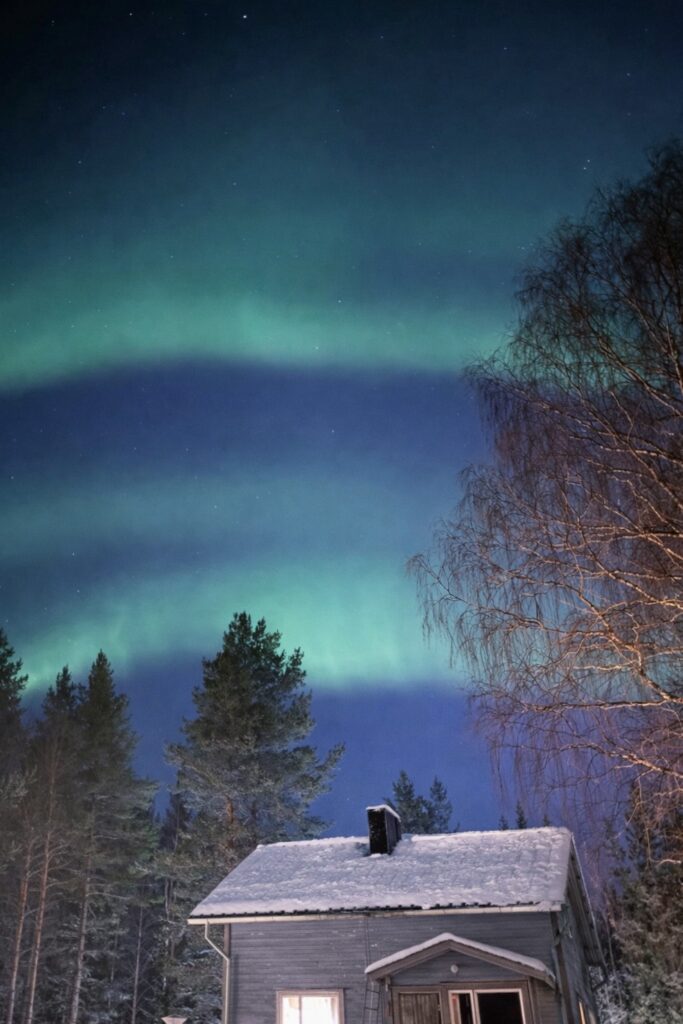
The aurora borealis is a natural phenomenon created when solar particles collide with Earth’s atmosphere. Even during the current solar maximum, a period of intense solar activity, there are no 100% guarantees. Forecasts can only predict visibility a few hours ahead.
While winter is the most popular season for visitors, autumn and spring are actually the most active Northern Lights periods. The skies must be dark and cloudless for sightings, so getting far away from bright lights and buildings is essential. Hilltops and lakeshores are excellent view points, and your chances drop to almost zero when it rains or snows as the clouds simply block the view.
Auroras can also be surprisingly local. It’s possible that the sky above you stays quiet, while just a few kilometres away someone else is watching the lights dance at the same moment. Always check local aurora and weather forecasts, and consider downloading aurora alert apps. My favorite is AuroraAlert! RealTime.
The best time to see the Northern Lights is usually between 9 p.m. and 2 a.m., when the sky is darkest and auroral activity peaks.
On average, in Northern Lapland, auroras can be seen up to 200 nights a year, from September to April, whenever the sky is clear and sufficiently dark. Between end of August 2024 and mid-April 2025, I documented every aurora on Instagram and saw 49 occurrences, even though I often slept by 10 p.m. Many shows were missed simply because I was a sleep or I wasn’t outside at the right time.
Northern Lights are visible in Lapland for over eight months, from early August until late April. Aurora activity is not evenly distributed throughout the season. It peaks twice a year, in autumn and spring. This is caused by the “Equinox Effect”, a scientifically proven phenomenon where Earth’s magnetic field aligns in a way that allows solar particles to interact more efficiently with the atmosphere.
Technically, auroral activity happens all year round. However, due to the Midnight Sun and bright summer nights, the auroras are not visible during summer. Because the nights are very short at the beginning and end of the season, the chances are lower in early August and late April.
Can Northern Lights be faint? Yes, and this is normal
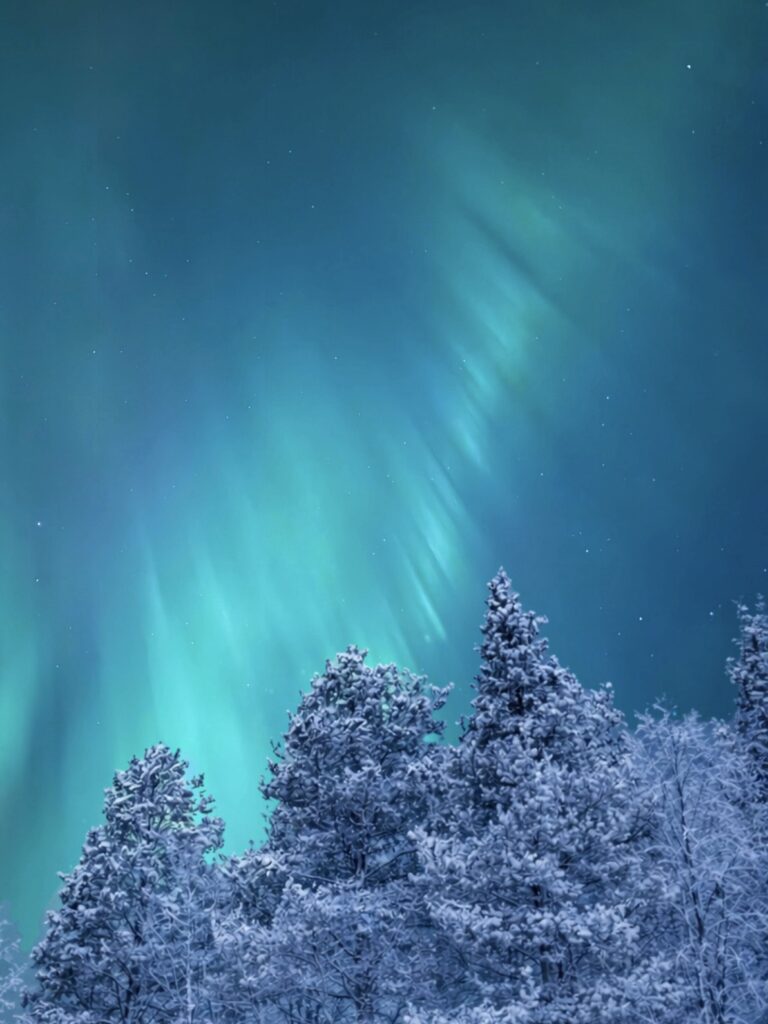
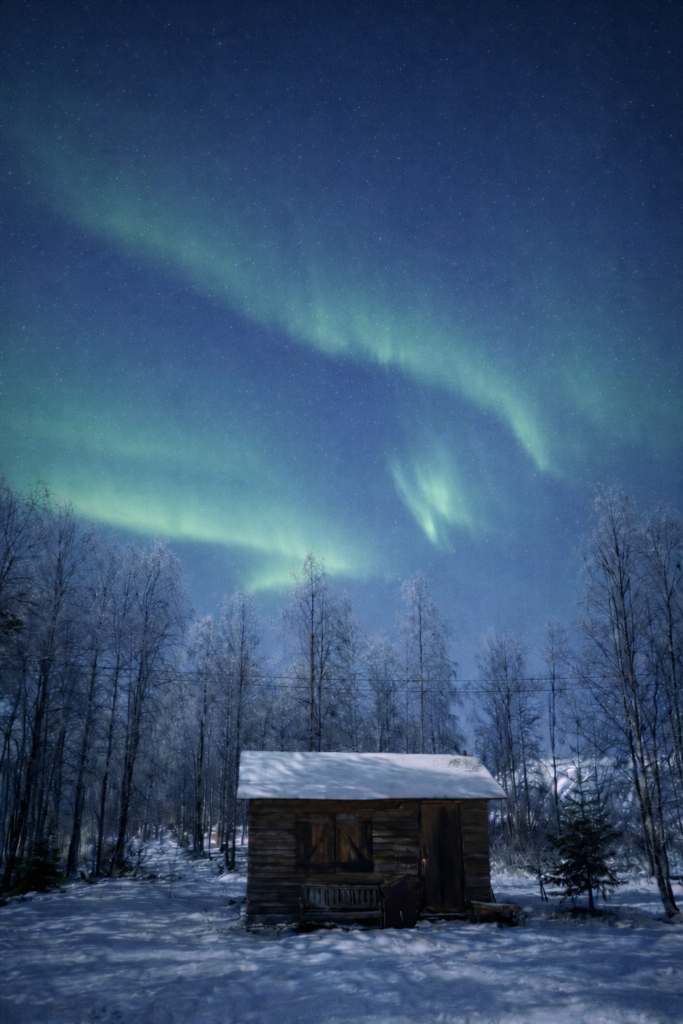
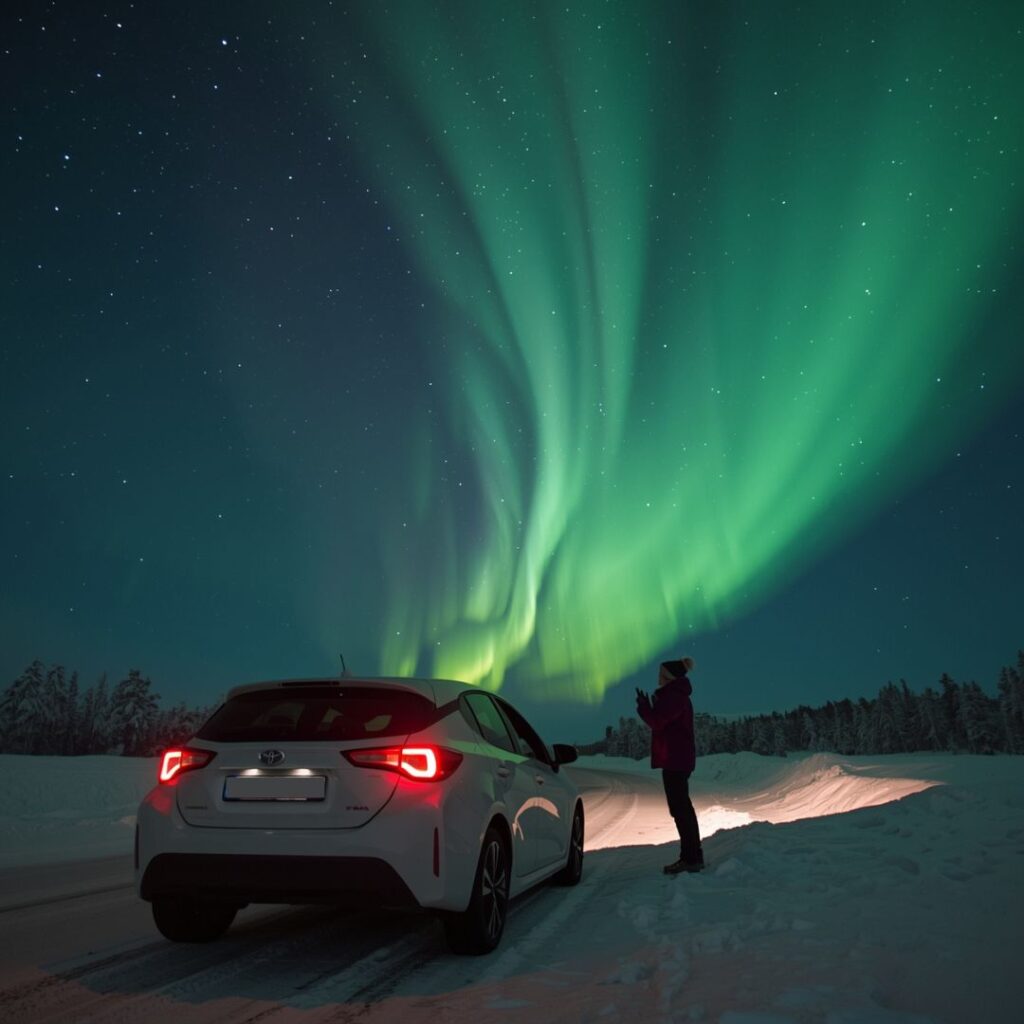
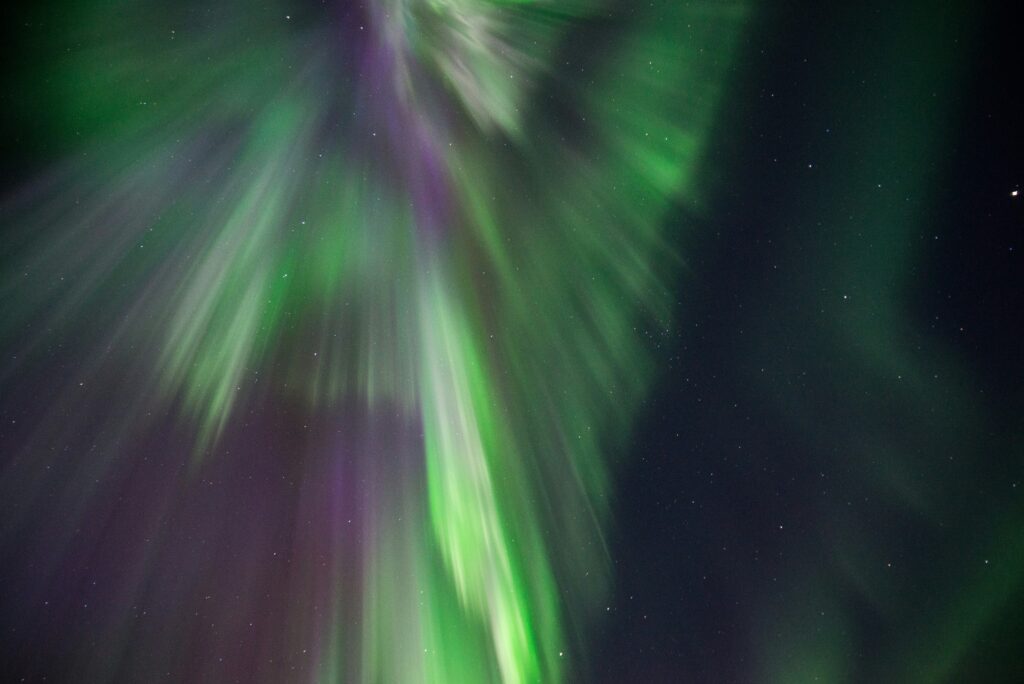
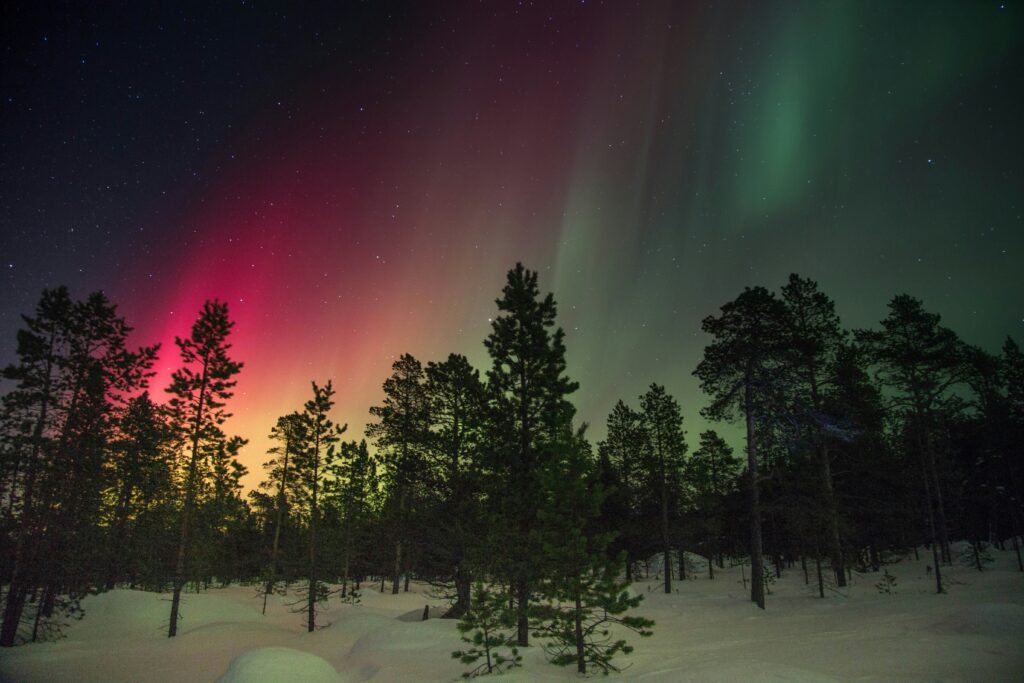
Not all Northern Lights explode across the sky in bright green, purple, and red waves.
Sometimes auroras appear very faint, almost like thin clouds or a pale mist in the sky. These weak auroras are easy to mistake for cloud cover.
What reveals them as auroras:
- subtle movement (clouds don’t “dance”)
- soft, uneven shapes
- your camera, which often sees colors more clearly than the human eye
In many cases, even a phone camera is enough to confirm whether you’re seeing auroras or just clouds.
How to see faint auroras better with your eyes
If you don’t see much at first, don’t give up.
- Let your eyes fully adjust to the darkness (this takes 15–30 minutes)
- Stay away from streetlights, buildings, and cars
- Avoid checking your phone, bright screens ruin night vision
Once your eyes adapt, you’ll often start noticing a soft green glow that wasn’t visible before.
Important:
Faint auroras are often just the beginning. Many strong aurora shows start weak and gradually intensify, so it’s worth waiting to see if the activity builds.
Choose your tour wisely
In Rovaniemi and other Lapland towns, many companies offer Northern Lights tours. Some take large groups by bus to fixed locations every night, regardless of the weather. Others focus on small groups and flexible routes, following real-time aurora forecasts.
It’s important to understand that Northern Lights can never be guaranteed. Despite this, tours are sometimes marketed with strong promises or reassuring wording that may give a misleading impression of certainty. In reality, visibility can range from breathtaking displays to completely zero, and this isn’t always communicated clearly before booking.
Marketing terms such as professional photographer, long experience or authentic local operator are commonly used. While these phrases sound trustworthy, they don’t automatically reflect formal training, deep local knowledge, or the actual quality of the experience. The reality behind these labels can vary significantly from one operator to another.
Responsibility and quality are also often justified through certificates, labels, and large numbers of reviews. It’s worth looking a little deeper into what these actually mean. Some certifications are based on independent assessments, while others rely mainly on applications or paid labels.
Likewise, a high number of reviews or star ratings doesn’t always equal high-quality or responsible practices, marketing strategies play a role here too, which is why critical reading is essential.
Look for tours that promise an experience rather than a guaranteed sighting. Even if the aurora doesn’t appear, a well-designed tour should still deliver value through atmosphere, nature, storytelling, and the overall experience.
Many companies now use the term “Northern Lights tour” for fixed-location experiences, while “aurora hunting” usually refers to actively searching for clearer skies over a wider area. Some hunting tours may travel long distances, occasionally even crossing into Norway to escape cloud cover, while others may be cancelled at the last minute due to weather conditions.
Try different ways to hunt Auroras
You don’t have to sit on a bus or a minibus to chase the lights. There are many unique and memorable options:
- Snowmobile Northern Lights Safari: Driving through frozen forests and over silent lakes by snowmobile is a thrill on its own. Even if the sky stays dark, the feeling of speeding through the wilderness at night is unforgettable. PLUS often you would pay around 100€/ person for snowmobiling tour, while Northern lights snowmobile tour go for around 140€/ person, and you drive multiple hours.
- Reindeer Sleigh Ride: A peaceful glide through snowy woods under the stars, and maybe under the aurora connects you to Lapland’s oldest traditions. The quiet rhythm of the sleigh bells and the reindeer’s breath in the cold air make it a truly atmospheric experience. Northern lights Reindeer ride is often also a lot longer reindeer ride that you would get otherwise.
- Aurora by Snowshoes or Huskies: For those who like a bit of adventure, snowshoe hikes or dog-sled rides offer an very unique experience in the dark quiet forests.
These tours turn your aurora hunt into an adventure, not just a waiting game. Pairing aurora hunting with another activity like snowmobiling ensures you get value even if the Northern Lights don’t appear. Many tours combine a few hours of adventure with aurora hunting for a full experience.
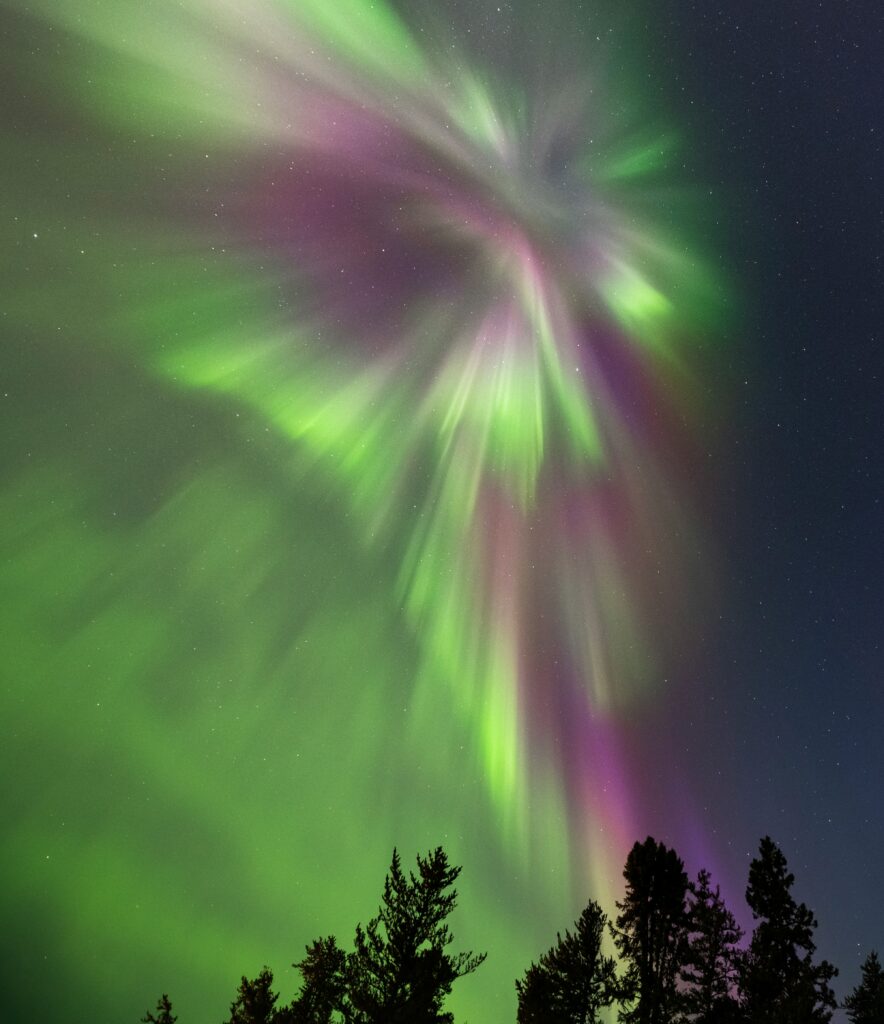
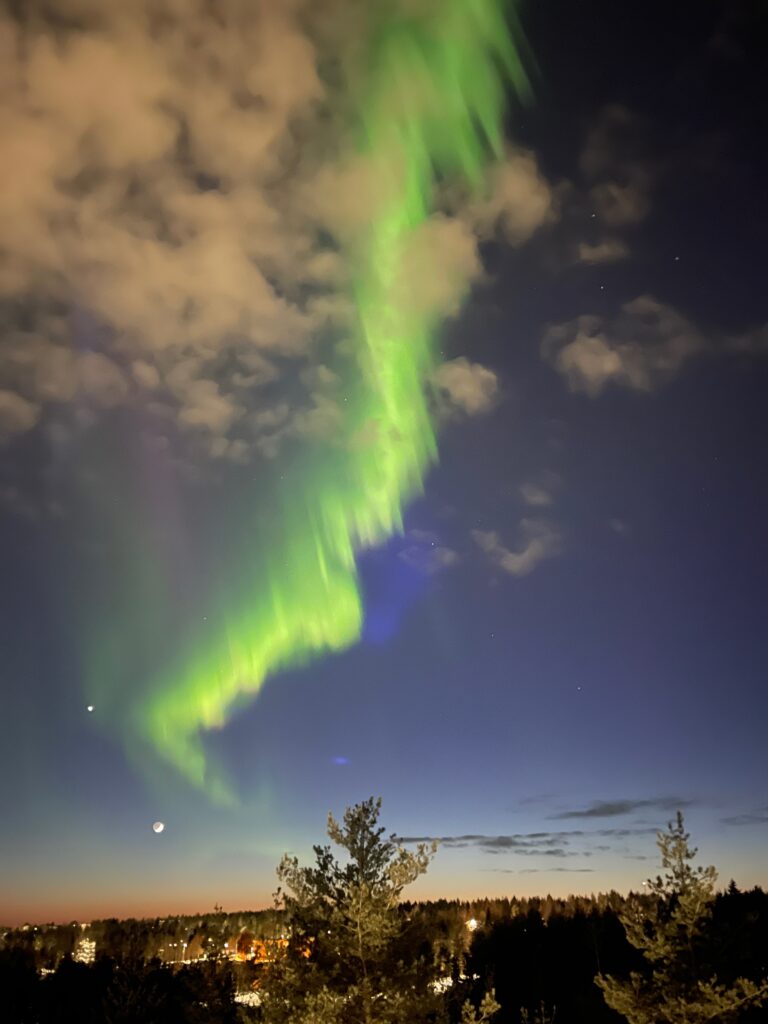
DIY Northern lights hunting – Know when and where to go
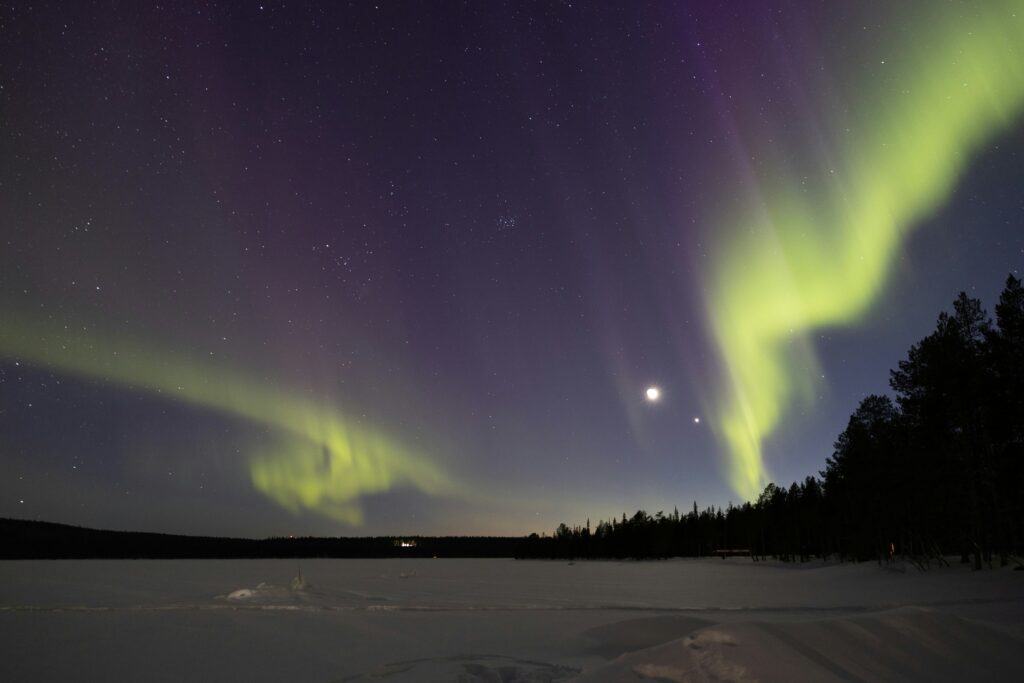
- You do not need a guided tour to hunt the Northern Lights. With a rental car, good aurora apps, and some planning, you can explore independently.
- Self-guided aurora hunt allows you to move at your own pace and stop whenever the sky looks promising, which is ideal for photography and quiet observation.
- Never stop in the middle of the road in the dark. Use bus stops, designated parking areas, or lay-bys if you need to pull over.
- Keep your engine running and your lights on to prevent the battery from draining, and always make sure you have enough fuel. Gas stations are not frequent in Lapland.
- Stick to main roads and well-maintained routes. Smaller roads, often marked with higher road numbers, are narrower and less maintained. For example road number 4 is our main road.
- Avoid private roads. Fields are always privately owned and used for farming or grazing animals.
- Do not walk on fields and never leave litter behind. Trash can be extremely dangerous to livestock and reindeer.
- Avoid wandering far into dark forests alone. Choose open lake shores, hilltops, or other open areas with a clear view of the sky.
- Use real-time aurora and weather apps to guide your decisions. Windy is especially useful for tracking cloud cover.
- I highly recommend to use some aurora alert apps. My personal favorite is AuroraAlert! RealTime.
Best months for auroras in Lapland:
- September
- October
- March
These months often offer:
- higher auroral activity
- darker nights (especially in autumn)
- fewer clouds compared to mid-winter
Enjoy the athmosphere and dress up warmly
Even without auroras, Lapland nights are pure magic. The crunch of snow, the glow of stars, and the silence of frozen forests create an unforgettable setting. For some the absolut silence might be little spooky, but after a moment you get used to it, and you will forever miss it. The Northern Lights are just one part of a much bigger experience.
It tends to be very cold, especially on clear winter nights when the Northern Lights are most likely to appear. Wear proper winter gear: layers, insulated boots, gloves, and a warm hat. Read more about layering for winter in Lapland here.
A comfortable alternative is to stay in a glass igloo, hut, or cozy cottage built for aurora viewing. You can watch the sky from a warm bed, hot drink in hand.
Local perspective
I’ve lived in Lapland for most of my life and have seen the Northern Lights hundreds and hundreds of times. I don’t remember my first auroras, as it is quite normal part of our life.
Now when I actually understand how lucky I am to live here and see this magical phenomena often, every single time feels special. Travelers often feel disappointed if they only catch a faint glimpse of green in the sky, forgetting that only a tiny fraction of people on Earth will ever see even that.
Of course, everyone dreams of witnessing the sky explode in red and violet waves, but perhaps it wouldn’t be as magical if it happened every night. The beauty of the aurora lies in its unpredictability. Nature decides to surprise us on her own terms.
Find out more about Lapland and Rovaniemi area here!
2 Comments