Layering for winter in Lapland
Lapland in winter is no joke. It’s the realm of frozen eyelashes, aurora-lit skies, and temperatures that can make your phone battery faint from shock. For travellers dreaming of husky safaris, snow-covered forests, and that surreal silence, one question quickly becomes existential: what on earth do I wear?
Locals in Finnish Lapland have a simple mantra for surviving and thriving in the cold: “There’s no bad weather, only bad clothing.” It’s not bravado; it’s practical wisdom earned through trial, error, and frostbite avoidance. Let’s unpack that wisdom in layers. Literally.
Before we even get to the packing list, let’s understand what you’re dealing with. In midwinter, Lapland temperatures regularly hover between –10°C and –30°C (14°F to –22°F). The cold is dry, so it can feel surprisingly manageable, until the wind joins the party. Days are short, the sun a shy visitor, but the light is ethereal: soft, blue, sometimes shimmering with orange and pink.
The trick to comfort is to trap your body heat while allowing moisture to escape. Sweat, ironically, is your enemy up here, it’ll freeze fast and drag your body temperature down. So, we layer. Not randomly, but with purpose. Layering for winter in Lapland is its own form of art.
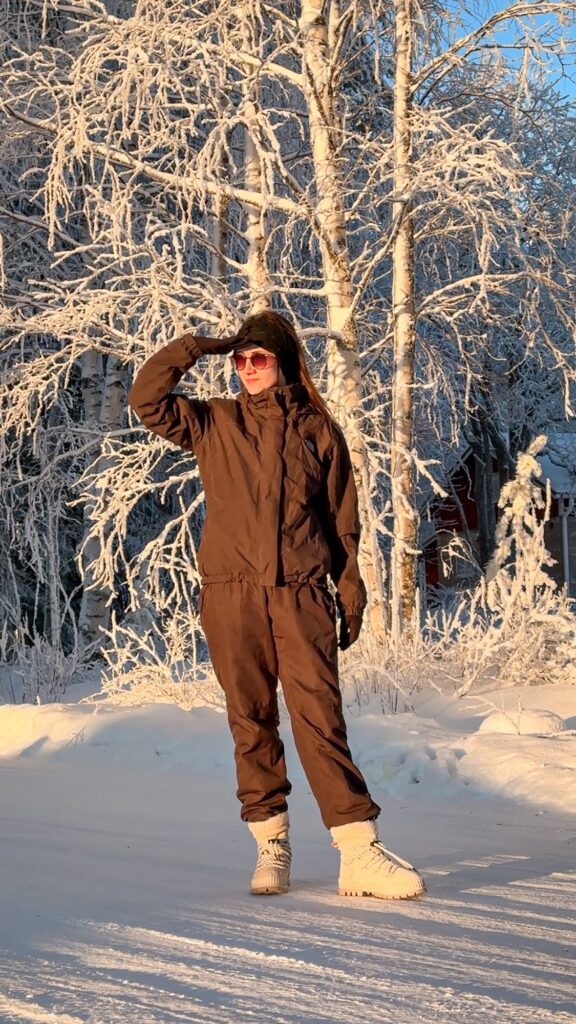
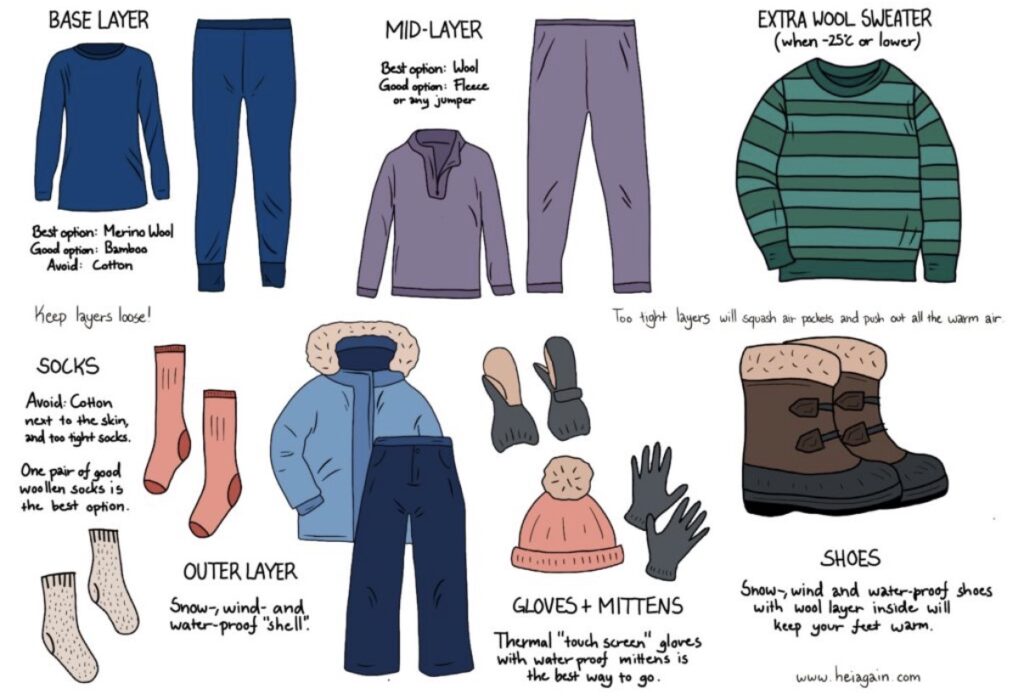
Base Layer:
Your base layer is your personal thermostat. Its job: wick moisture away from your skin.
I swear by merino wool and bamboo. Both are warm even when damp, doesn’t stink, and feels soft instead of scratchy. Synthetic fabrics like polyester can also work, just avoid cotton. Cotton traps moisture and turns into an icy sponge.
A solid setup:
- Top: Long-sleeved merino/bamboo or synthetic thermal shirt
- Bottom: Long thermal underwear or leggings
You can find very good thermal underwear sets from Outnorth.
Check their collection here(*)
For extended outdoor activities (snowshoeing, skiing etc.), choose midweight or heavyweight thermals. If you’ll be indoors often, lightweight will do.
Mid Layer:
This is your heat trap. Think of it as the warm air pocket that hugs your body. Temperatures can swing wildly in a single day.
Your best options:
- Fleece jacket or pullover: Breathable, quick-drying, and cozy.
- Wool sweater: Traditional and reliable. Reindeer herders have used thick wool for centuries.
- Light down or synthetic insulated jacket: Especially good if you’ll be standing still for long periods (watching the Northern Lights, for example).
If you’re staying in town, you might only need one insulating layer. But for full-day excursions or photography outings where you’ll stand still in –25°C, double up.
Outer Layer:
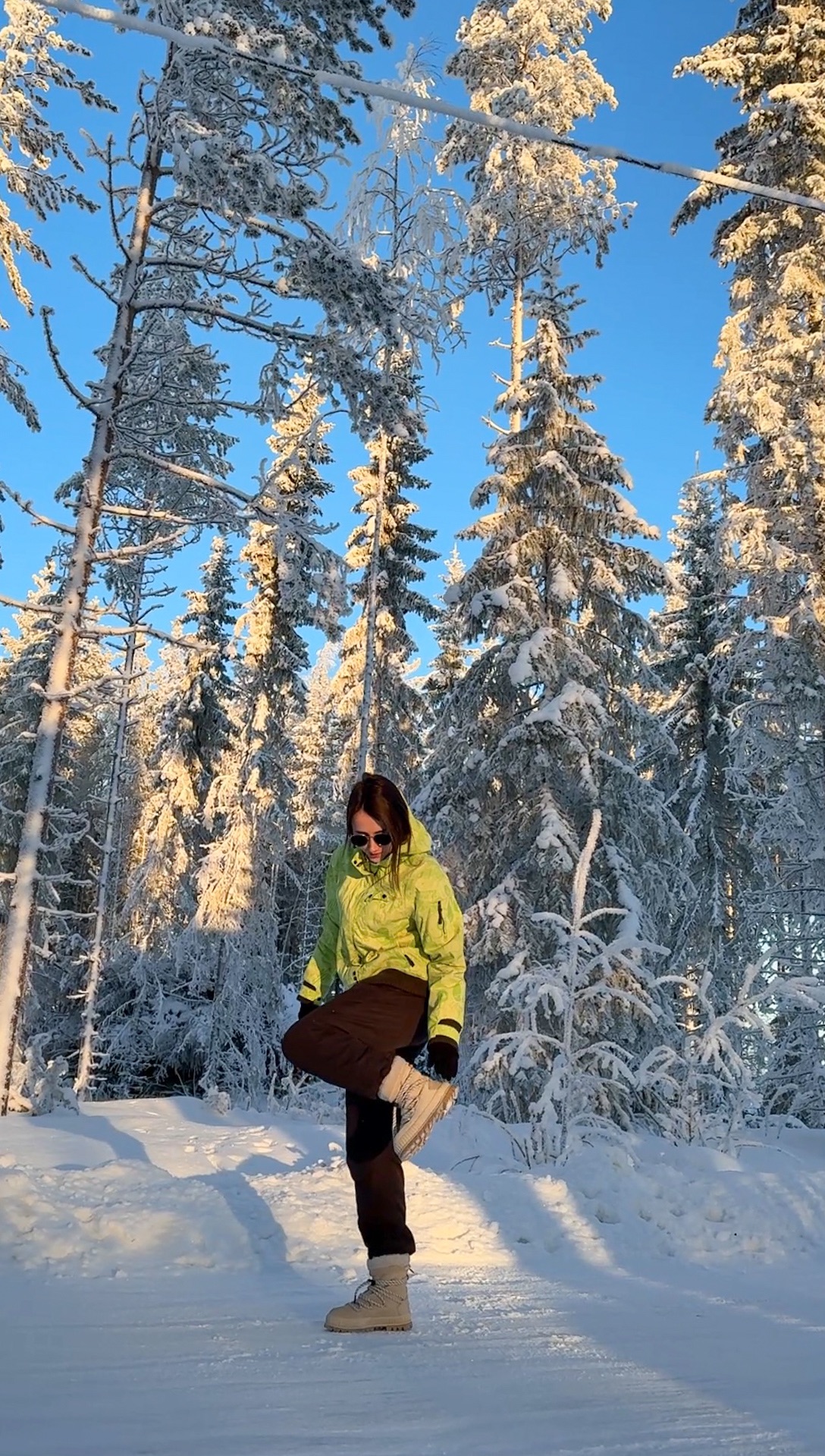
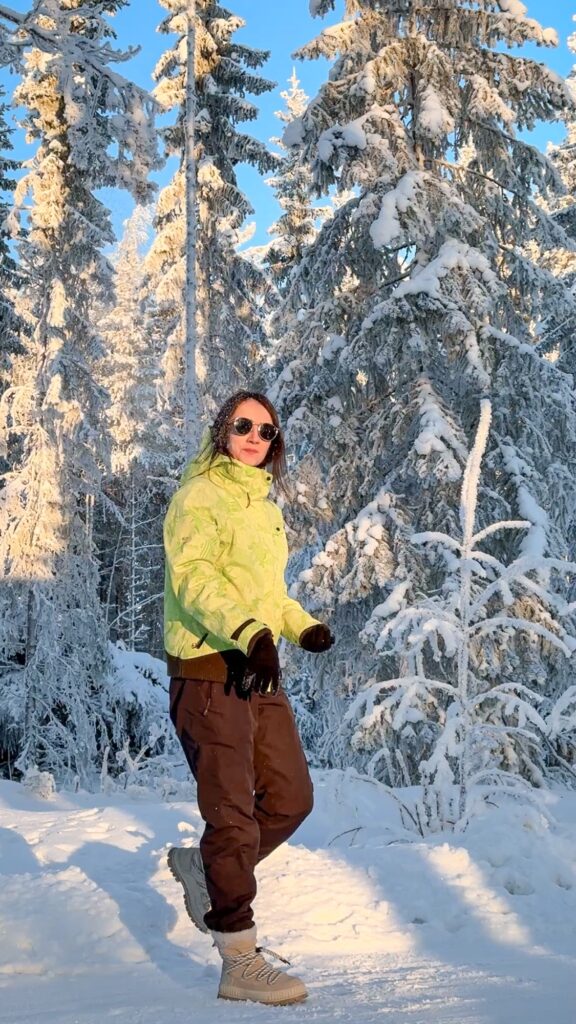
This is your fortress. It blocks wind, snow, and sleet while letting moisture escape. I favor shell jackets and trousers made from waterproof, breathable fabrics (like Gore-Tex or similar). If you prefer simplicity, a down parka with a tough outer shell also does the trick, just make sure it’s long enough to cover your hips.
Look for:
- Adjustable hood
- High collar
- Snow skirt or adjustable hem
- Large pockets for gloves and handwarmers
For pants, insulated snow trousers or shell pants with thermal leggings underneath are ideal.
If you’re planning activities like husky safaris, snowmobiling, or long Northern Lights tours, proper layering isn’t optional, it’s what makes the experience enjoyable. While some companies offer winter clothing, it’s often limited to an outer suit and boots, which won’t keep you warm without good base and mid layers.
Many of the best-rated, small-group tours don’t include clothing at all, so being properly dressed can be the difference between a magical experience and a miserable one.
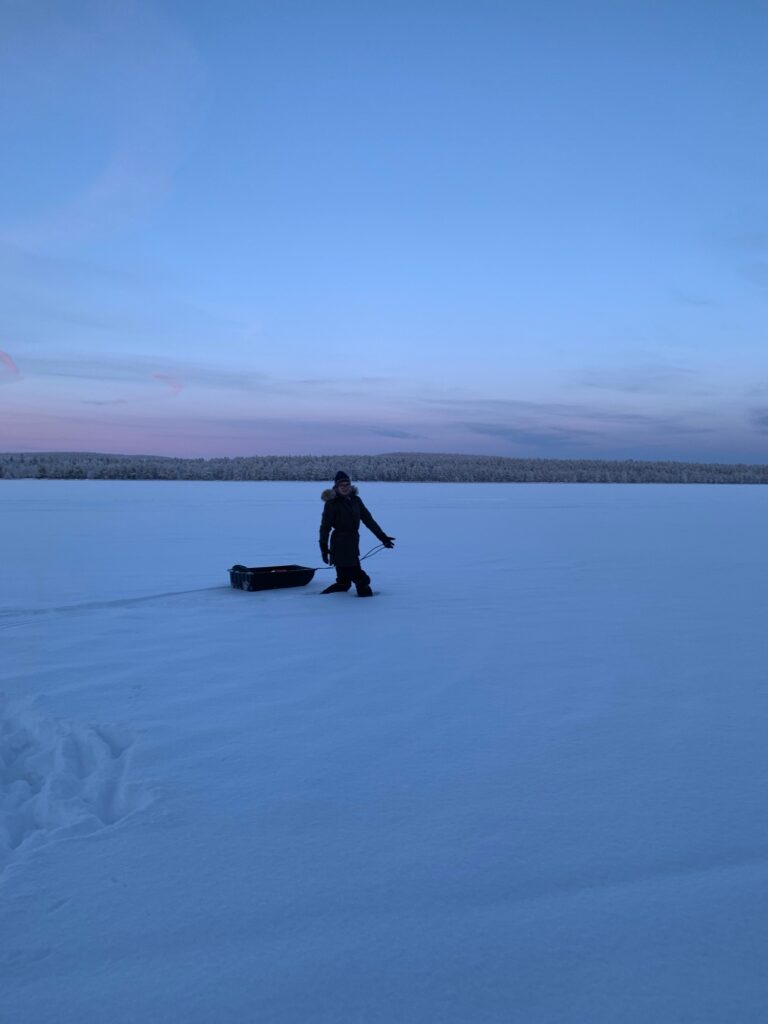
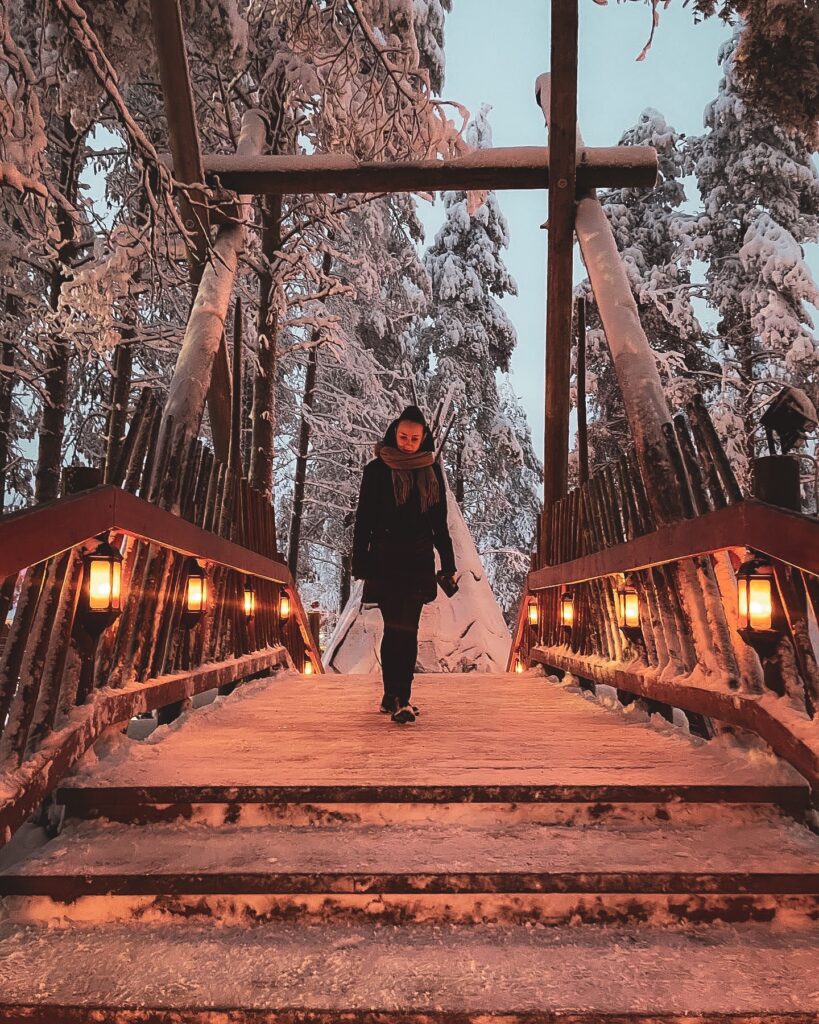
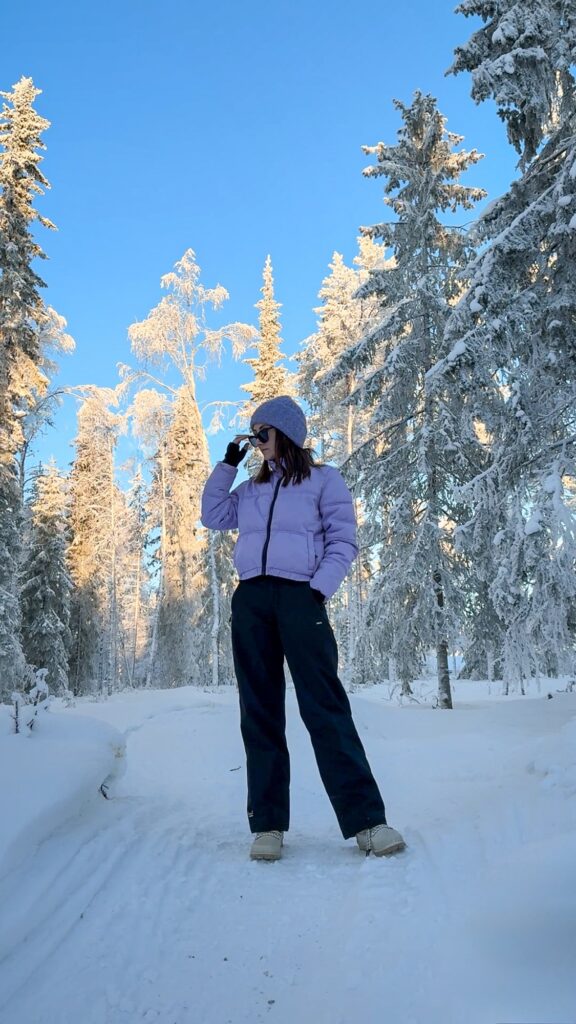
Hands, Feet, and Head:
You lose heat fastest from your head, hands, and feet.
Hands
Layer here too:
- Inner liner gloves (thin wool or synthetic)
- Outer mittens (not gloves, mittens keep fingers together, conserving heat).
Leather mittens with fleece lining are gold. Add a chemical handwarmer if you’ll be standing around at –25°C longer times.
Feet
Wool socks. Always wool.
Thin merino liner socks under thick wool socks create a warm, breathable combo. Avoid tight boots. Cramped toes mean poor circulation, which means cold feet. I often use only one pair of wool socks, which is always better option than 3 or more pair of socks, what you sometime see here.
For boots: insulated winter boots, with thick rubber soles. Locals love brands like Sorel, Nokian, or classic felt-lined boots. Waterproofing spray helps too, Lapland snow is dry, but you’ll still trudge through slush occasionally.
Head and Neck
A wool or fleece beanie that covers your ears is essential. Add a balaclava or neck gaiter for wind protection.
If you’re planning long snowmobile rides or aurora photography, bring a face mask or ski goggles to protect against windburn and frostnip.
Layering for Winter in Lapland: Functional, Honest, Effortlessly Cool
Lapland isn’t a fashion catwalk. A well-fitted parka, clean lines, and natural tones, grey, forest green, off-white, blend perfectly with the landscape. The beauty of arctic style is honesty: nothing pretentious. But of course, we welcome everyone as you are.
You’ll quickly notice the quiet confidence of people who’ve mastered the cold. It’s not about being trendy, it’s about thriving in demanding environments.
Find winter activities are worth dressing for at GetYourGuide
Packing Tips
- Pack layers, not single bulky coats. It’s easier to adjust and dry.
- Dry everything nightly. Most Lapland accommodations have drying cupboards or warm radiators. Use them.
- Bring spare gloves and socks. They’re the first to get damp.
- Plan your “inside outfit.” Locals don’t keep their homes cold, indoors is toasty. Lightweight indoor clothes are essential too and thermal underwear is totally ok outfit for hotel breakfast.
- Mind your luggage weight. Winter clothing can be bulky. Renting winter gear is also good option (often available from tour companies).
- Moisturizer and lip balm: The air is bone-dry; even eyelashes can freeze. Protect your skin.
Packing Checklist
Essentials:
- Merino wool/Bamboo etc. base layers (2 sets)
- Fleece or wool mid layer
- Insulated parka or shell jacket (Pack or Rent)
- Thermal snow trousers (Pack or Rent)
- Wool socks
- Insulated winter boots
- Liner gloves and mittens
- Beanie, neck gaiter, and face mask
- Moisturizer and lip balm
- Sunglasses and/or goggles
- Thermos flask
- Reflective patches or armbands !!
If you’re still planning your trip, these guides will help: DIY Lapland Travel Guide, Guided Tours in Lapland & Winter Driving Tips


4 Comments