Lapland Travel Inspiration

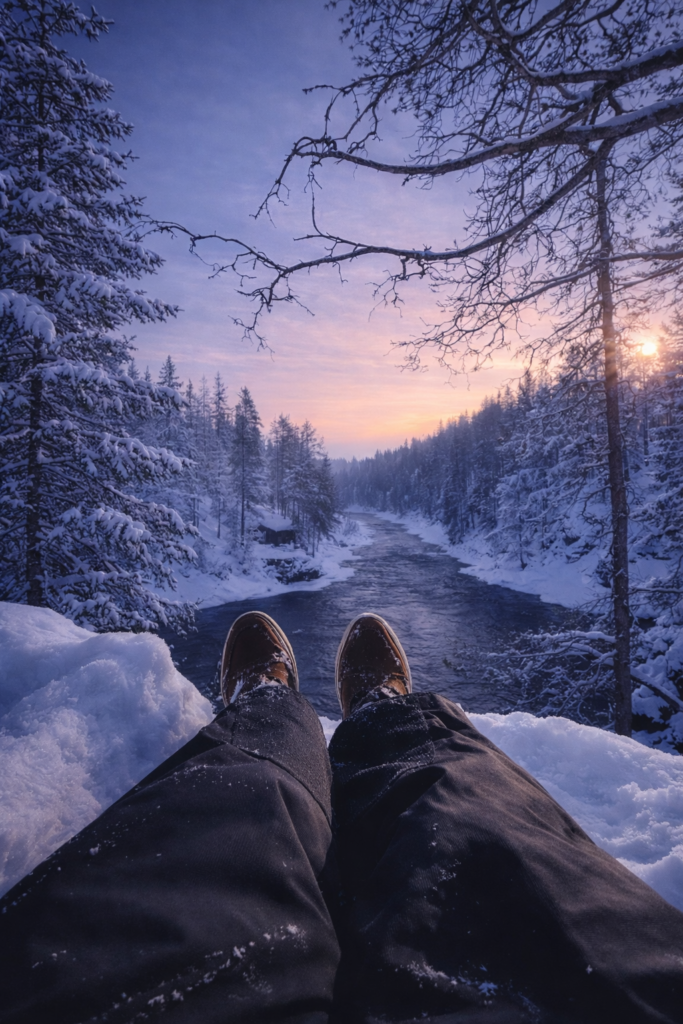
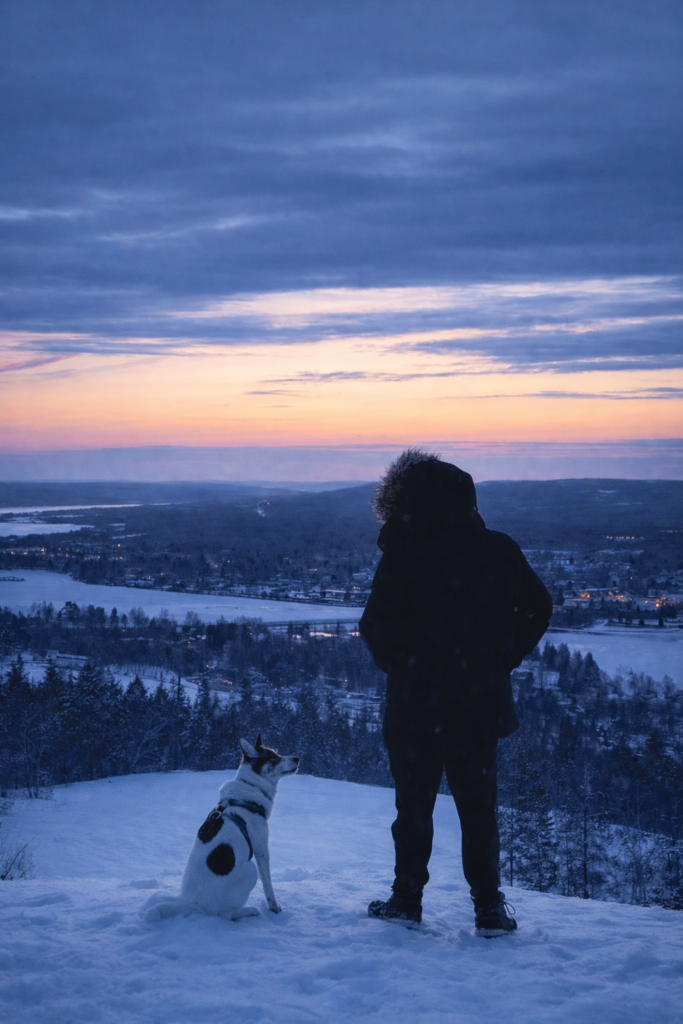
Traveler exploring snowy Lapland landscape under a glowing winter sky, surrounded by pine forests and Arctic scenery.
Traveler enjoying winter activities in snowy Lapland, surrounded by reindeer, auroras, and Arctic landscapes
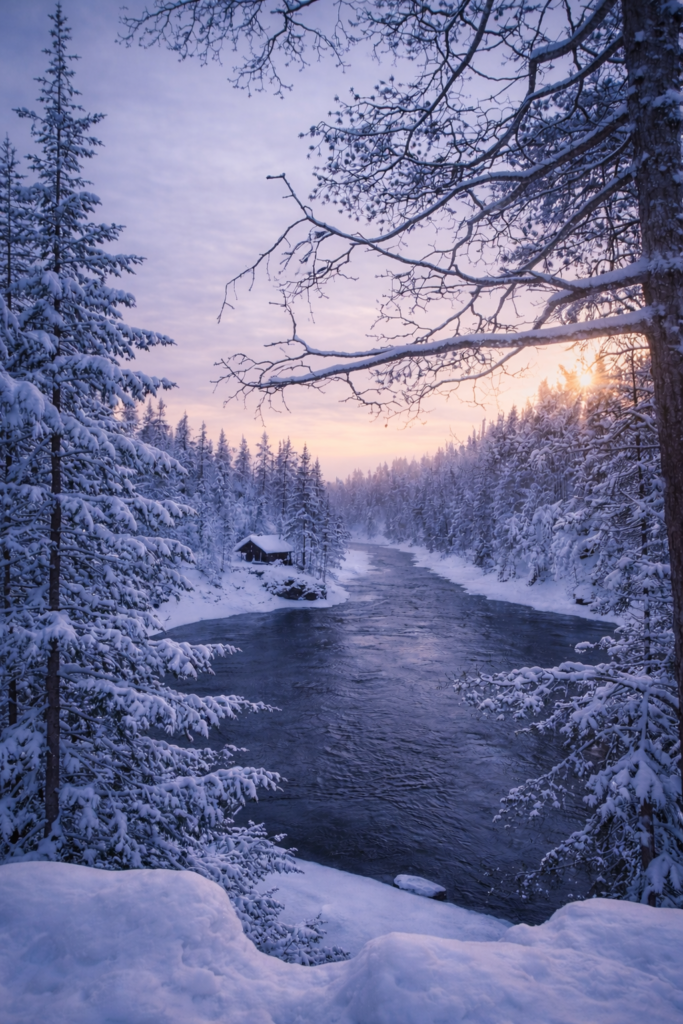
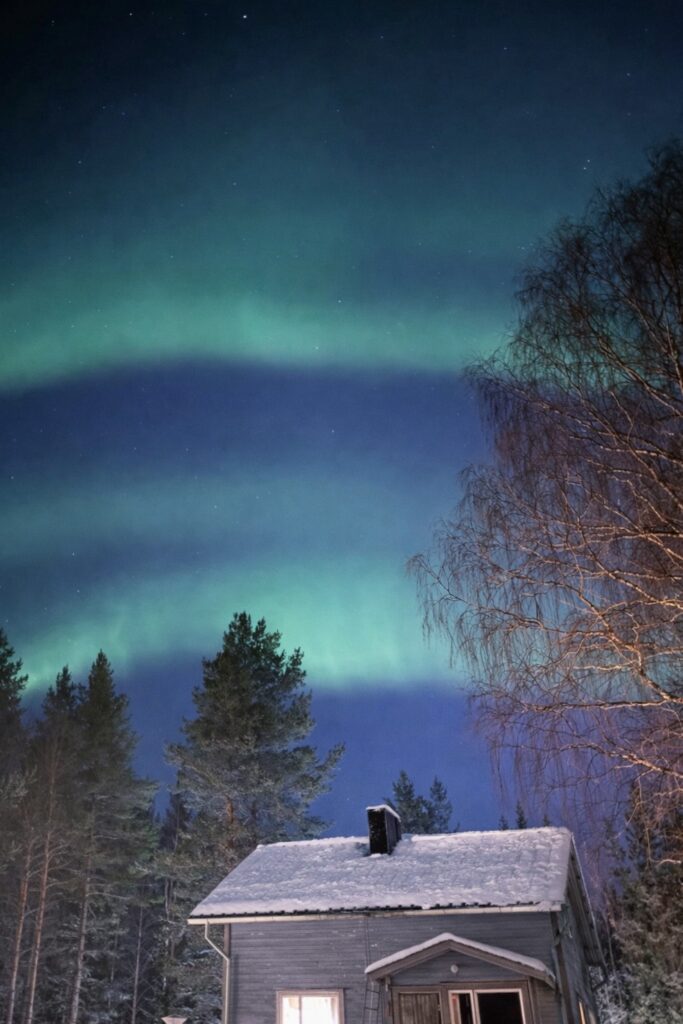
Scenic Lapland landscape with snowy forests, colorful Northern Lights, and a cozy Arctic village glowing in winter twilight.

What makes Lapland feel so special

Lapland is known for its silence, long distances, changing light and strong seasons. These elements shape every trip, whether you notice them or not.
The experience can feel calm or overwhelming, magical or surprisingly ordinary, depending on how you arrive and what you expect.


Why so many people are choosing Lapland right now

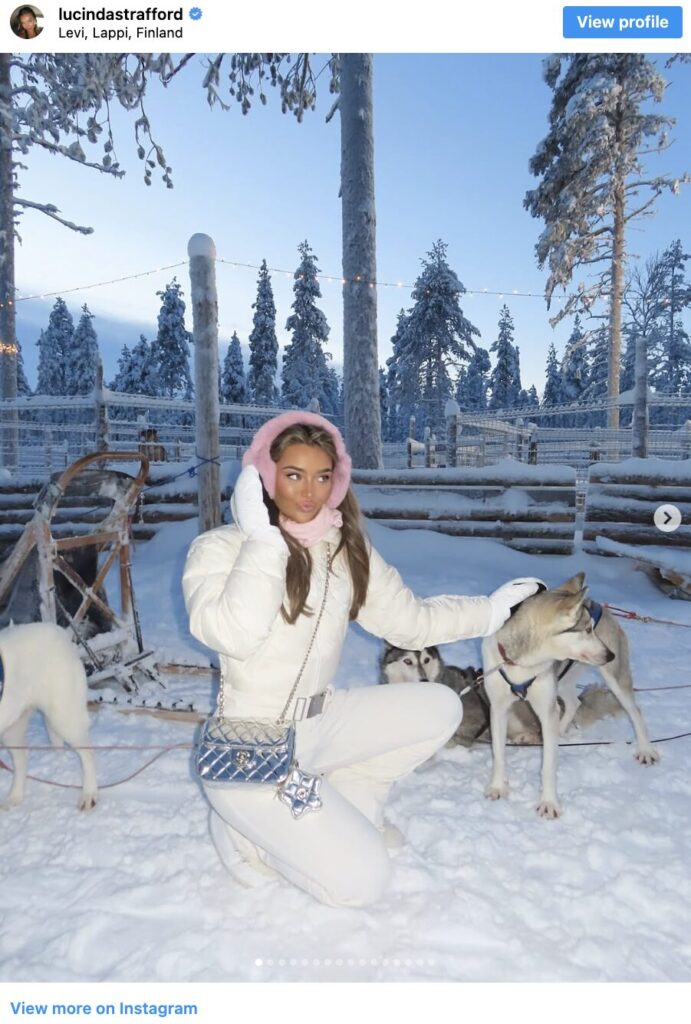
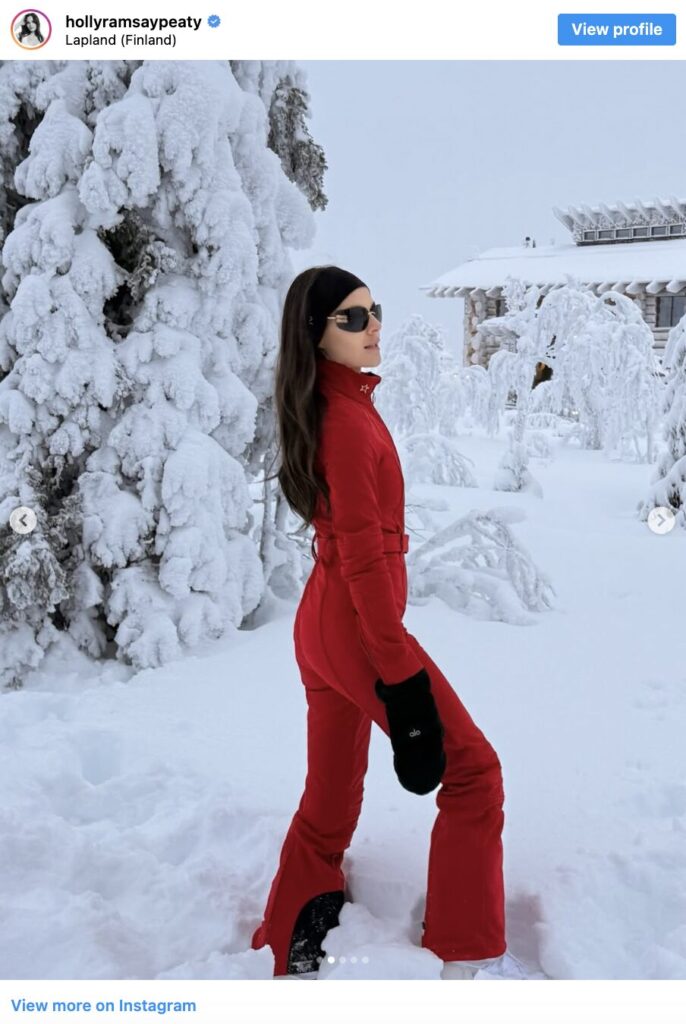
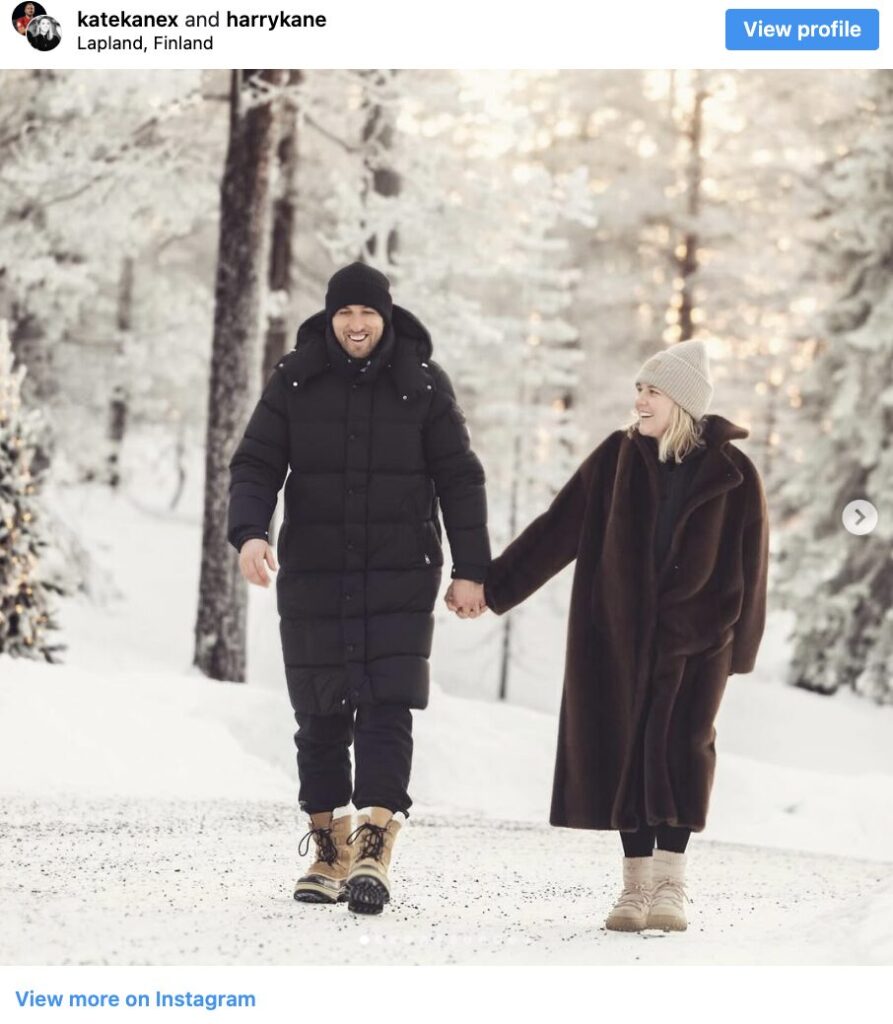
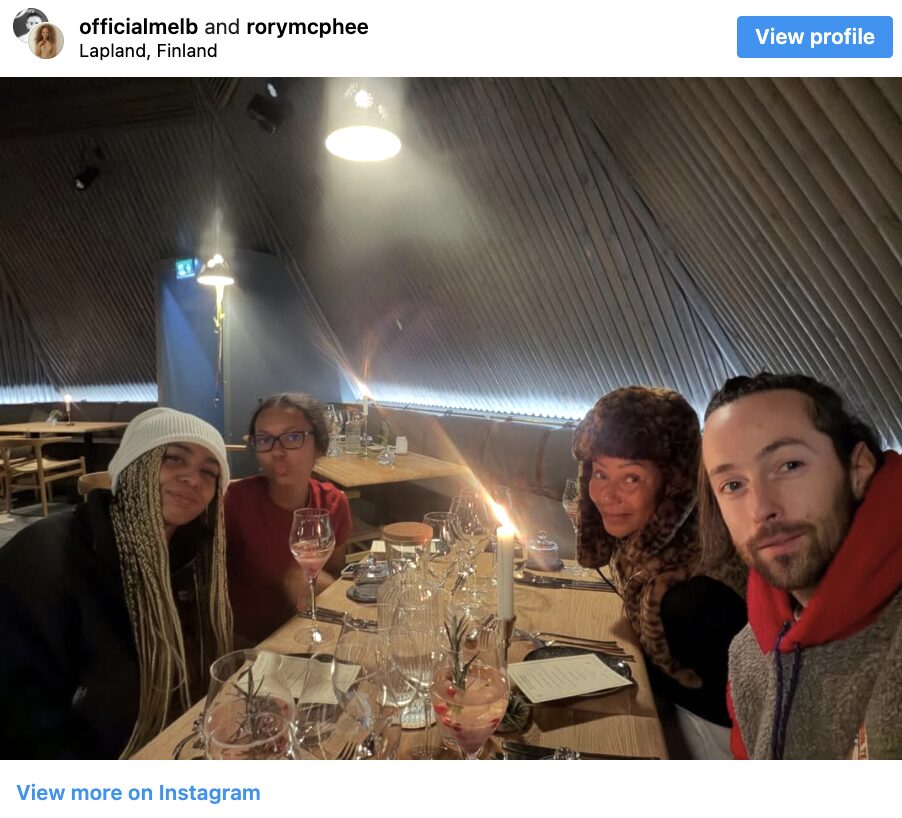
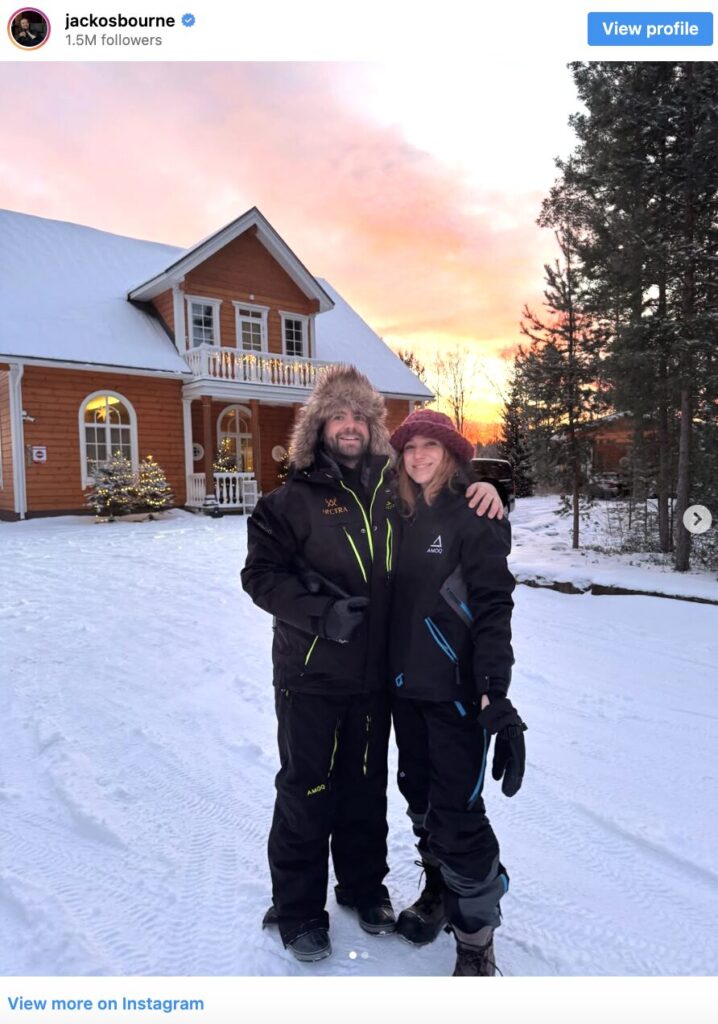
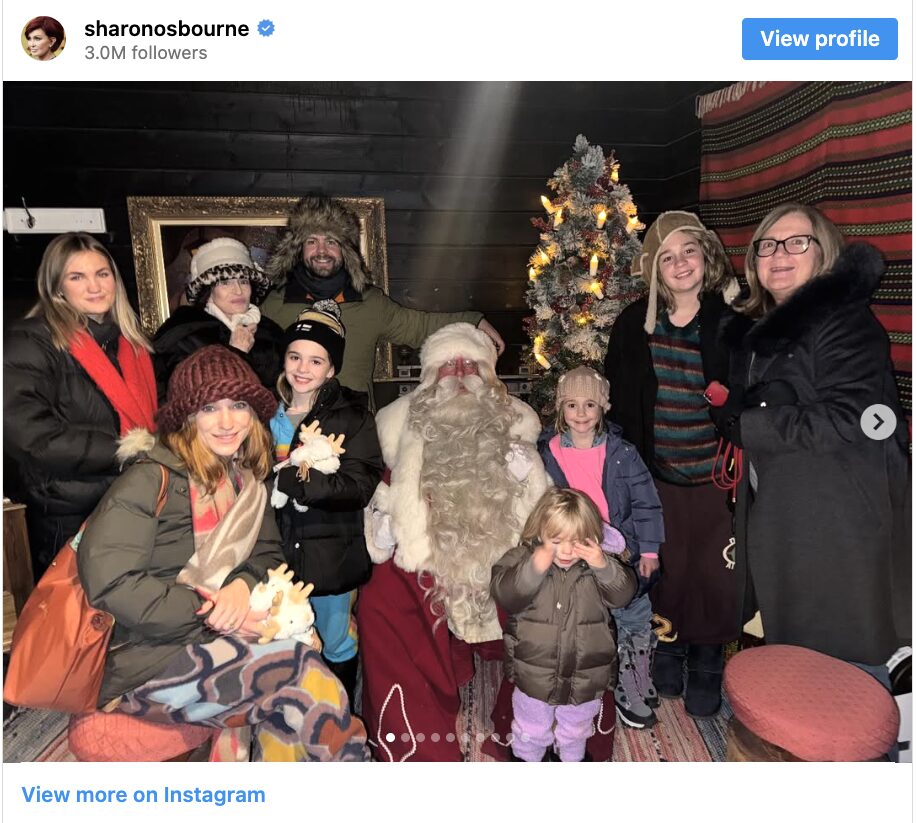
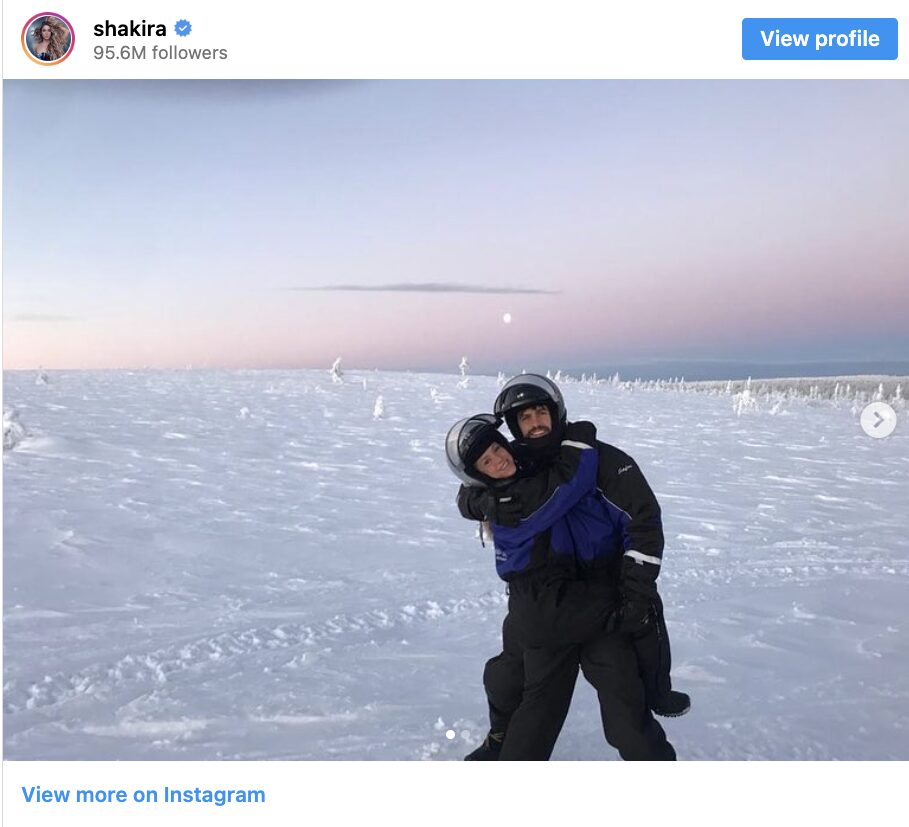
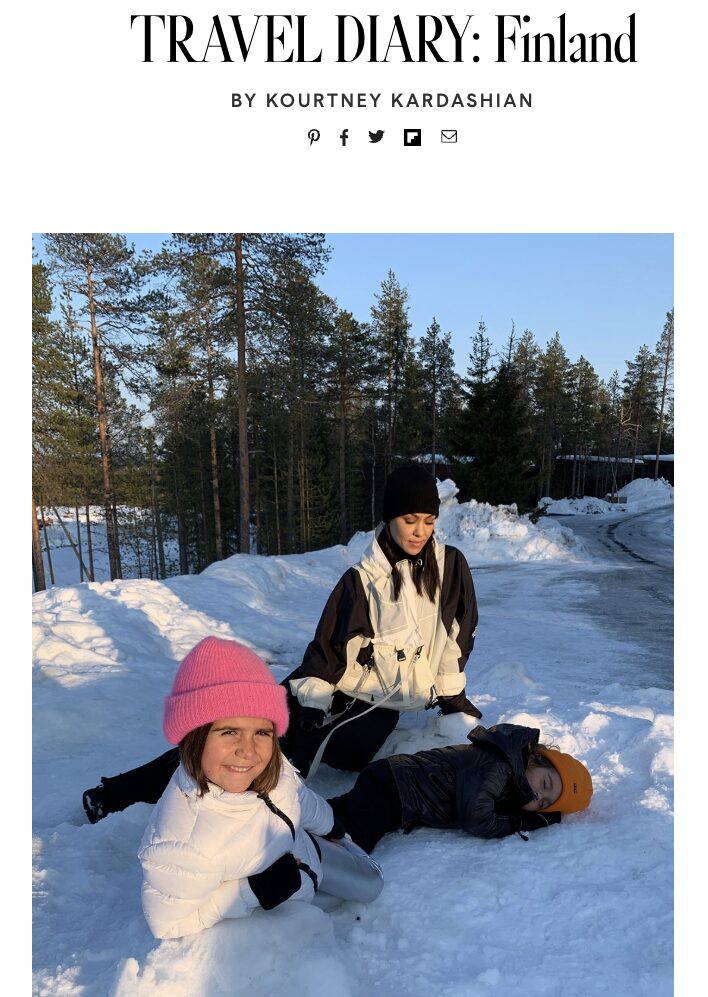
Well known figures, royals, athletes, actors and artists have been travelling to Lapland, often without much noise around it. These people have spent time here for the same reasons many other travellers do. Not for crowds or status, but for space, nature and a change of pace.

What makes Lapland interesting is that these experiences are not reserved for a small group. You do not need a private jet or exclusive access to enjoy the same things. The landscapes are public. Northern lights, snowy forests, saunas and winter roads do not change depending on who you are.

Inspiration starts With the Season, Not Activities
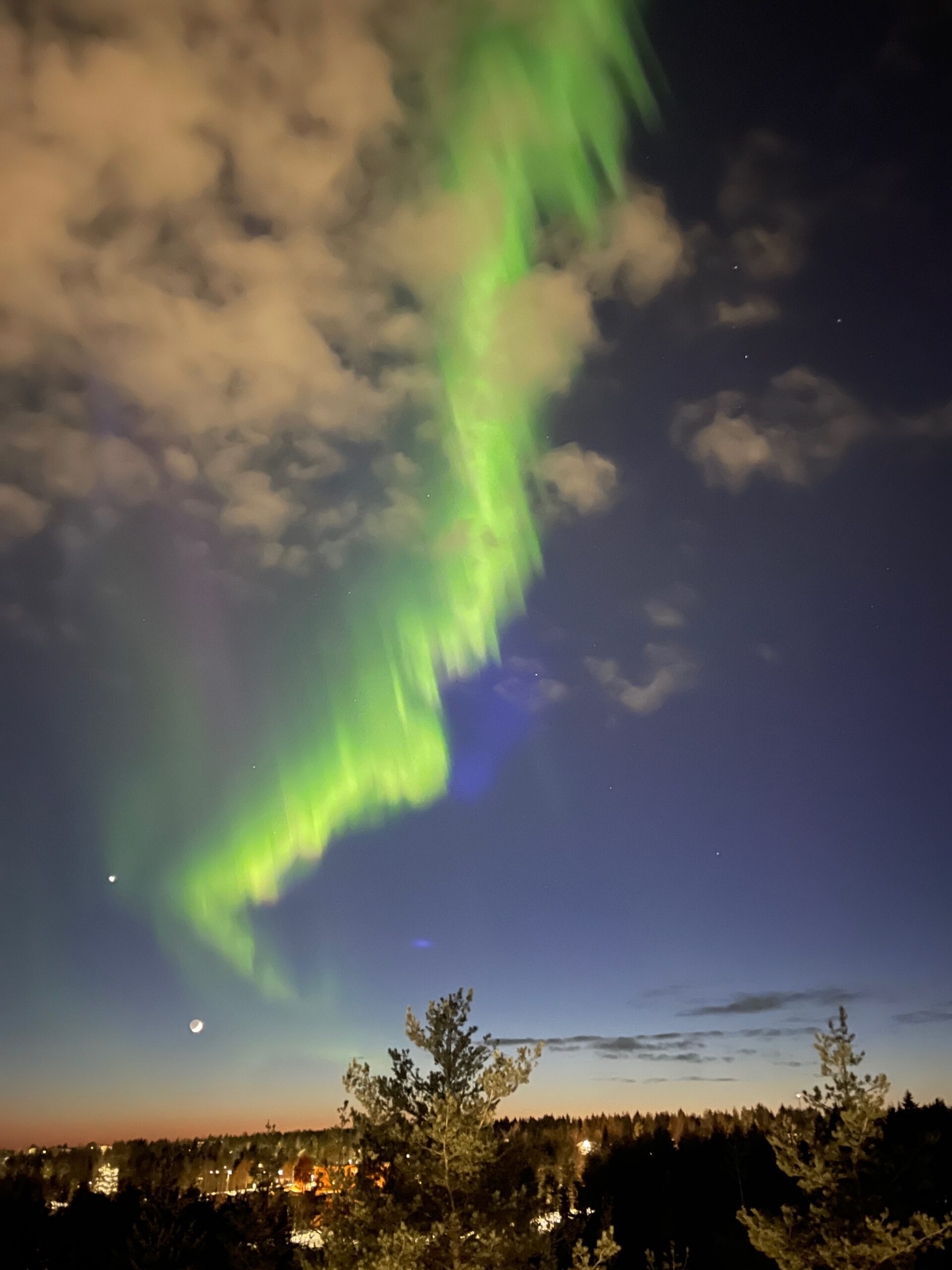
The dark season is often the part of Lapland that people are most curious about. Days are short and natural light is limited. The sun stays low or does not rise at all, depending on how far north you are, and artificial light becomes part of the landscape.


In practical terms, the dark season in Lapland usually begins in late September and lasts until the end of December/ early January. There is still daylight, but it is brief and soft, often concentrated around the middle of the day. Autumn is an excellent time for northern lights, and the first snow can arrive at almost any point during this period. When it does, it changes everything. Snow reflects light and brightens the surroundings, even when the sky remains mostly dark.


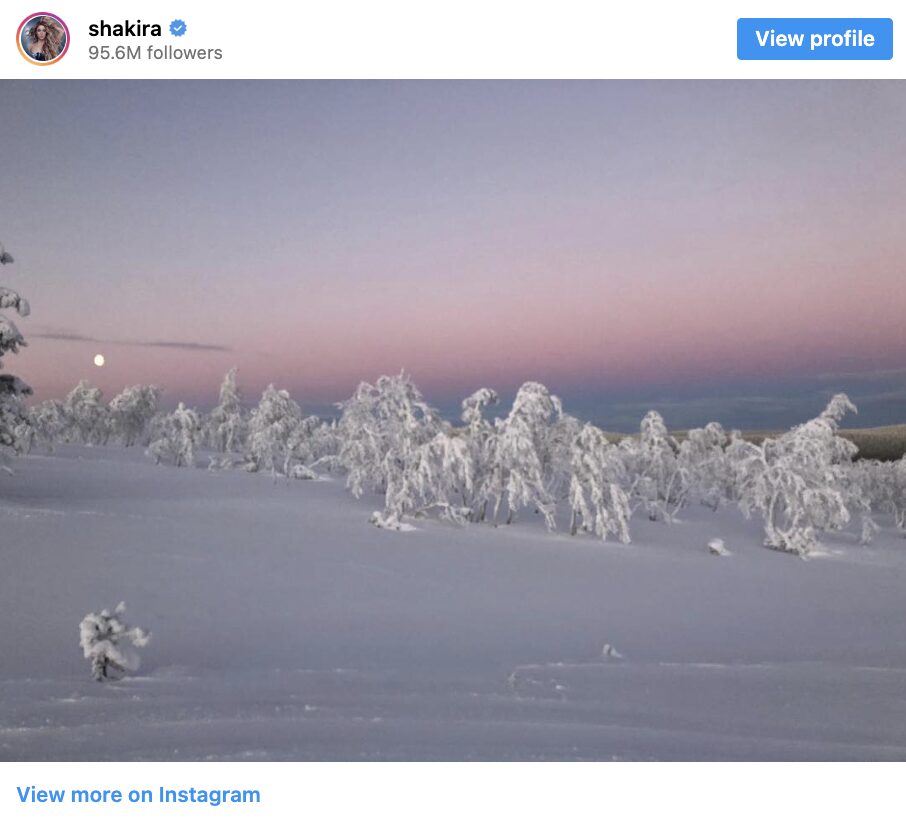
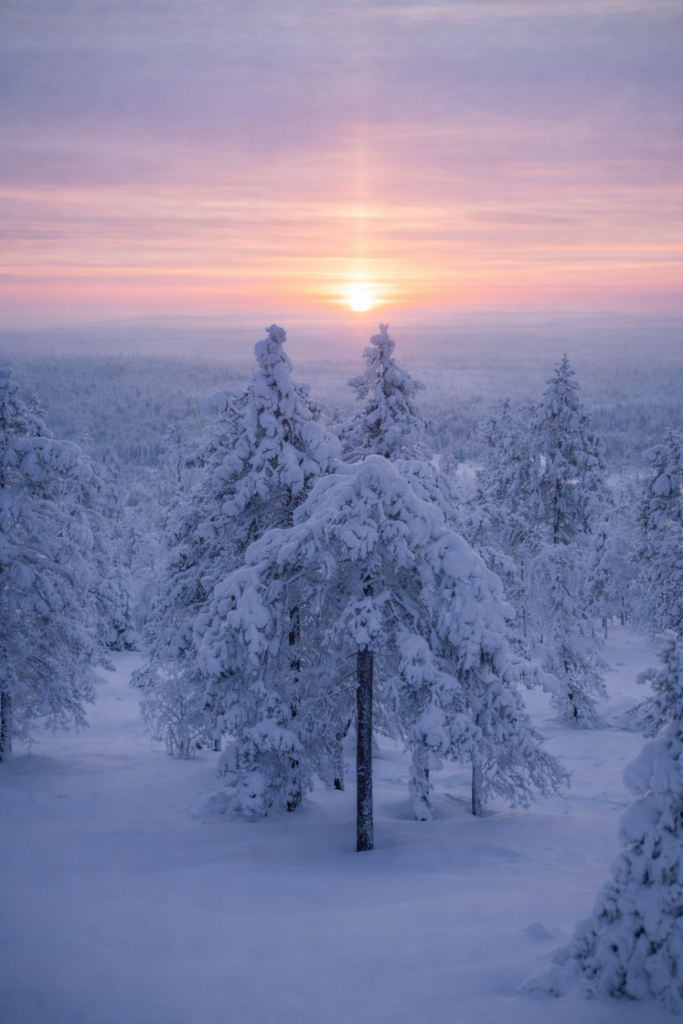
During autumn, the limited daylight often turns the sky shades of orange and deep blue. As winter approaches, the light shifts toward softer pink tones. Twilight is almost always present, lingering long before and after the sun itself.

The bright winter is the season most people picture when they think of Lapland. Snow covers the landscape, light reflects off every surface and the days feel clearer, even when they are still short.

This period usually begins in January and lasts through February and early March. After the darkest weeks of winter, daylight starts to returns. The change is noticeable. Each day feels a little longer, and the light has more strength to it. Snow plays a major role in how this season feels. Even on overcast days, the landscape appears brighter.

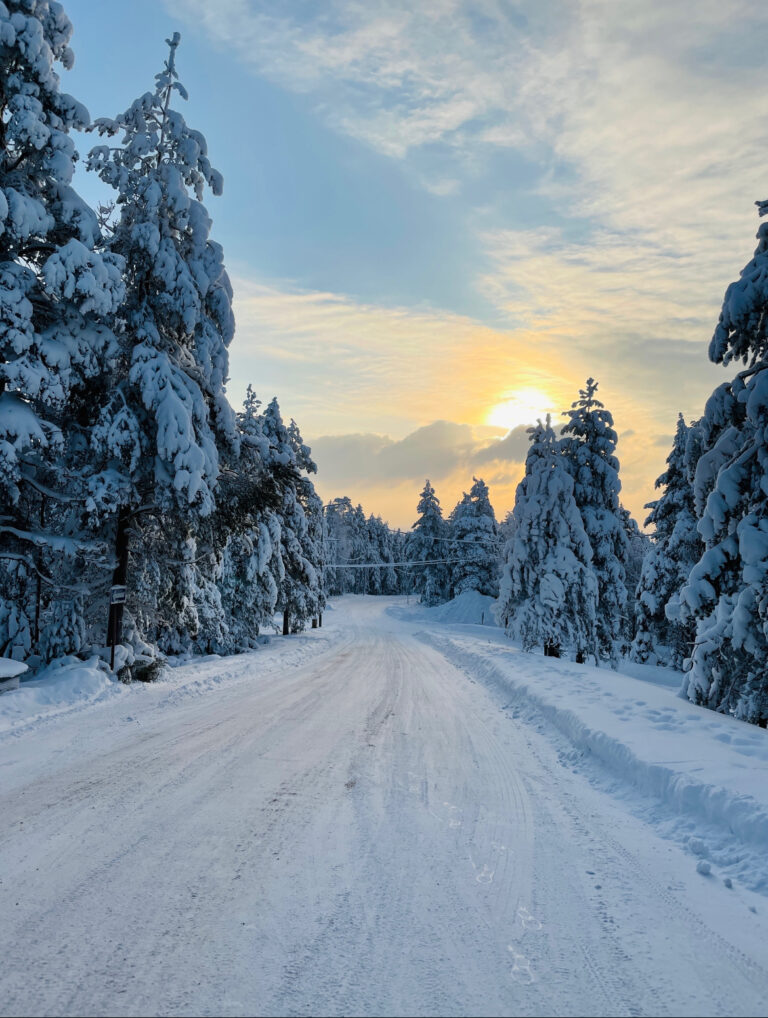
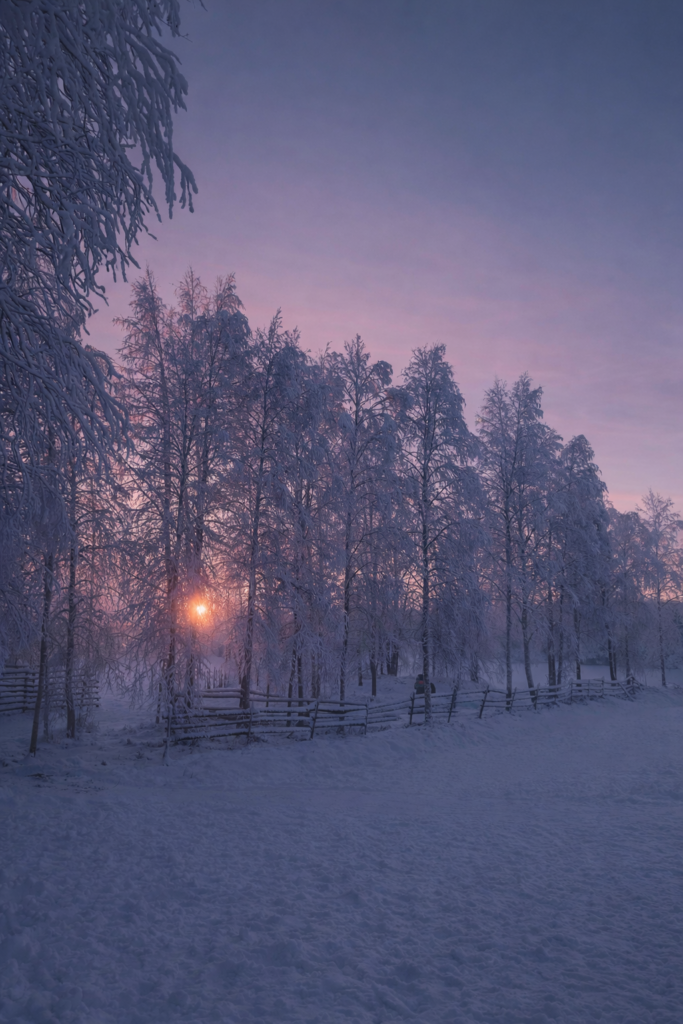
Temperatures are often at their coldest during bright winter. The cold is dry and crisp, and the air feels sharp rather than damp. Weather conditions can change quickly, but when they settle, the days feel calm and steady. This is also when Lapland looks closest to the images many people imagine. Snowy forests, pale blue skies, soft pink light during sunrise and sunset, and long stretches of white landscape.

The in-between seasons are often overlooked, but they show a very different side of Lapland. These periods usually fall in spring, as snow begins to melt, and in autumn, before winter fully arrives. The landscape is changing, routines are shifting and the pace feels quieter.

In spring, days grow longer quickly. Snow disappears unevenly, and the ground can feel wet and unpredictable. Rivers open, ice breaks and nature slowly wakes up. This is not the most polished time of year, but it is honest.

When autumn arrives, air cools, colors deepen and daylight fades again. Forests turn shades of yellow, orange and red before settling into darker tones.

The endless light is one of the most surprising seasons in Lapland, especially for first time visitors. From late May to mid July, the sun does not set at all in much of Lapland. Even august remains bright. Time starts to feel different when night no longer signals an ending to the day. Even late in the evening, the landscape remains bright and active.

Summer air in Lapland is rarely hot, at least by global standards. Days can feel warm and comfortable, but the heat is usually gentle rather than intense. This is why Lapland is increasingly described as a coolcation destination, a place to escape extreme summer temperatures elsewhere.

Sleep can be the biggest adjustment. Without darkness, days easily run long, and rest requires more intention. The endless light suits travelers who enjoy calm, unstructured days and who are comfortable letting go of strict schedules.

from the blog

Lapland Is Not Just a Checklist Destination

Lapland doesn’t reward efficiency. It rewards attention. If you want to plan your DIY Lapland Holiday, read our Ultimate Lapland Travel Guide here.

Activities Are the Frame, Not the Core

Remember, if your trip only works when everything goes exactly as planned, it’s too full.
Northern Lights

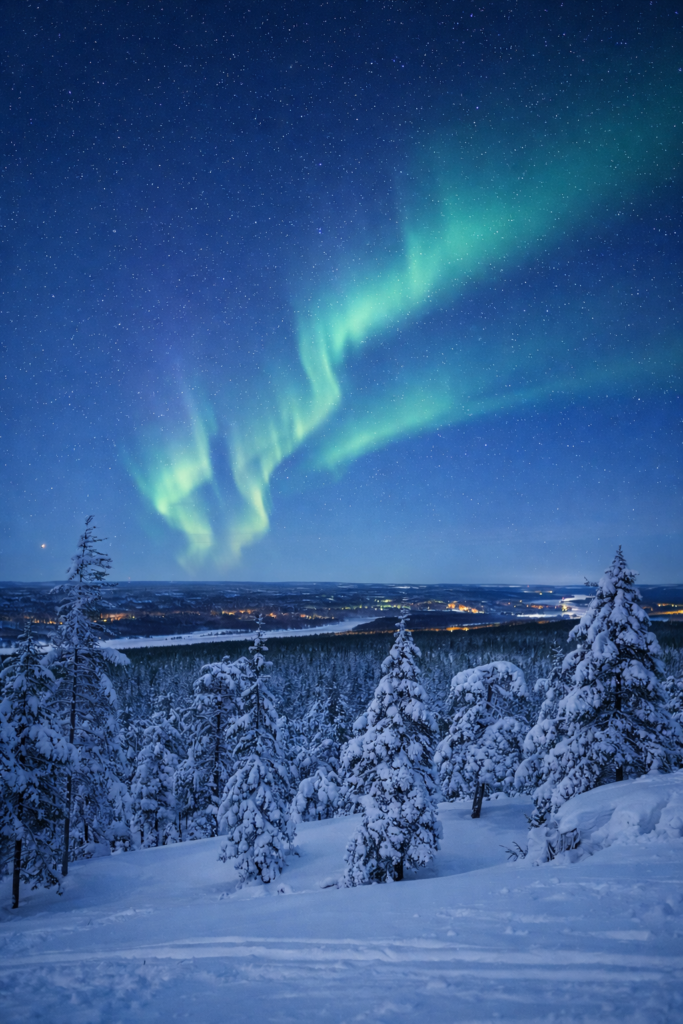
Chasing the northern lights is one of those Lapland moments everyone hopes for. When the sky comes alive, it’s pure magic.
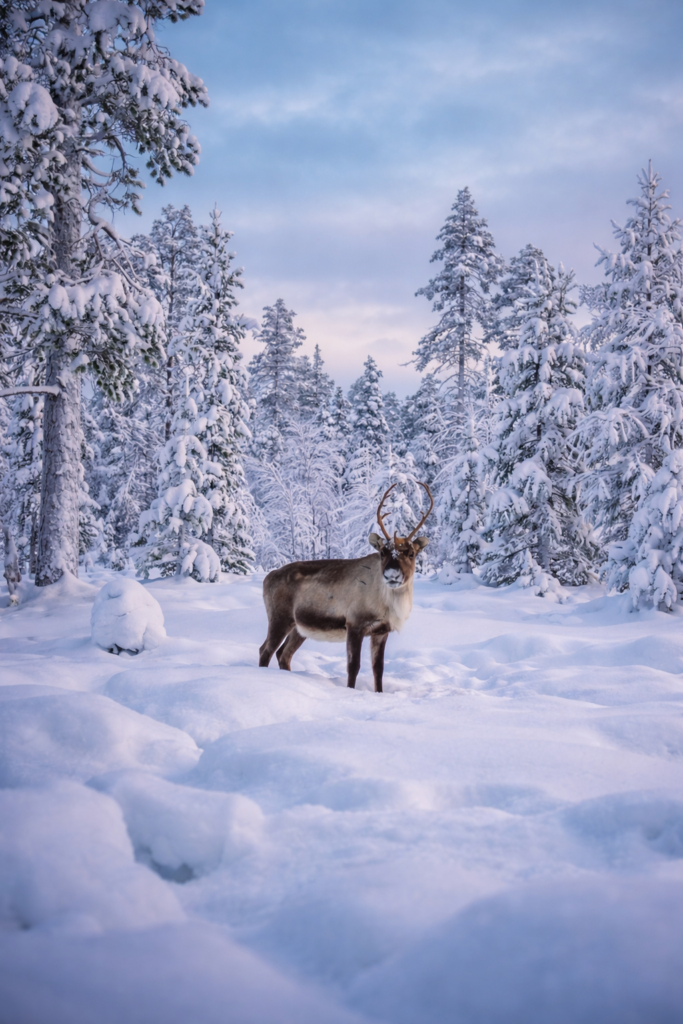
reindeer in the middle of the wilderness in lapland

Arctic Animals

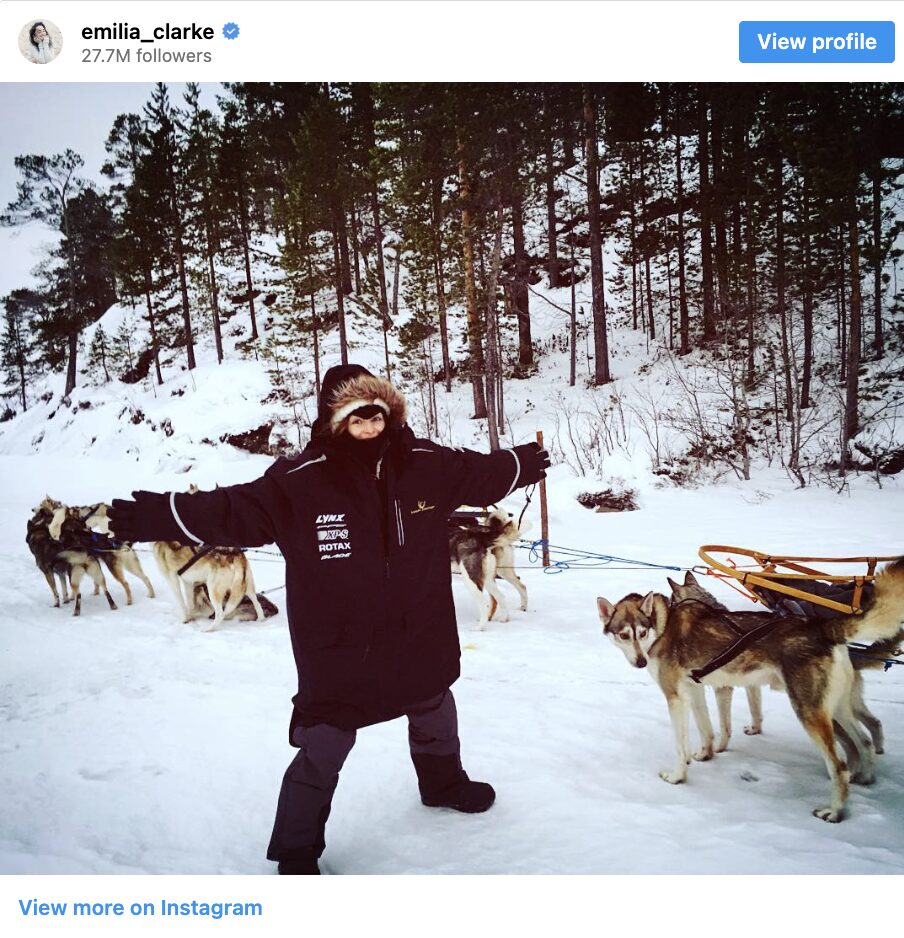
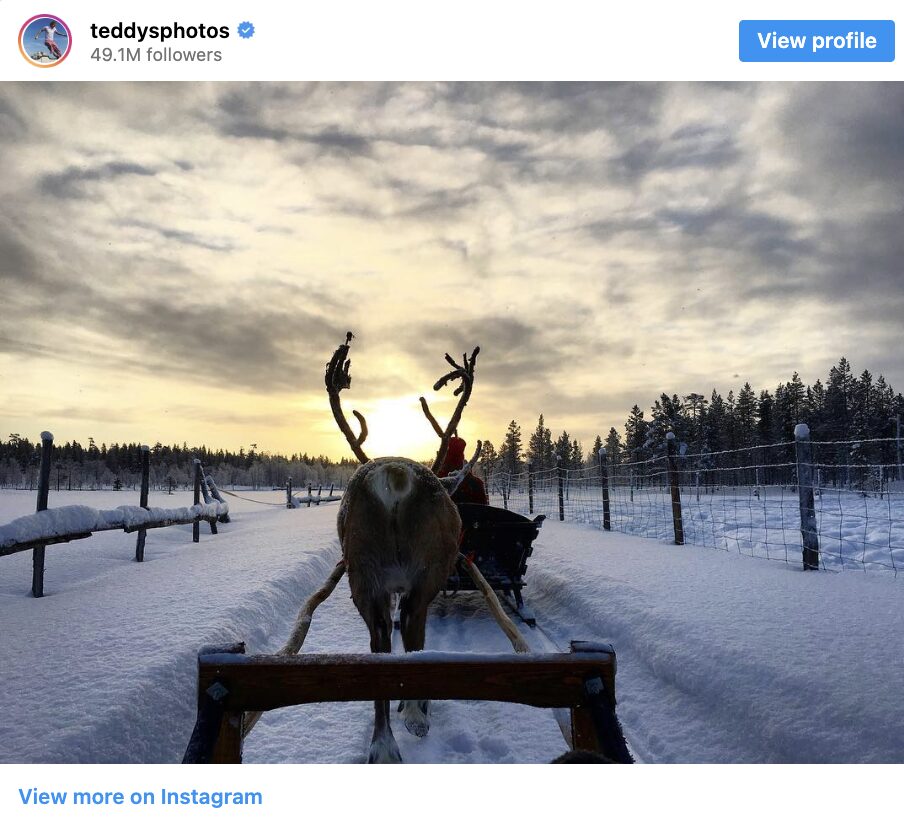
Meeting Arctic animals is a natural part of visiting Lapland. Reindeer, huskies and wildlife are big part of Lappish authentic experience.
Person riding a snowmobile on a snowy landscape during a beautiful winter sunrise.

Snowmobiling

Snowmobiling is one of the most fun ways to explore Lapland. Speed, snow and wide open landscapes make it a true Arctic must-do.
FAMILY FRIENDLY TRAVELING

Lapland Inspiration for Families

Lapland works surprisingly well for families, not because there is more to do, but because there is less pressure to do it all. Short days, simple routines, lots of fresh air and shared experiences bring families closer together in a way that busy destinations rarely do.
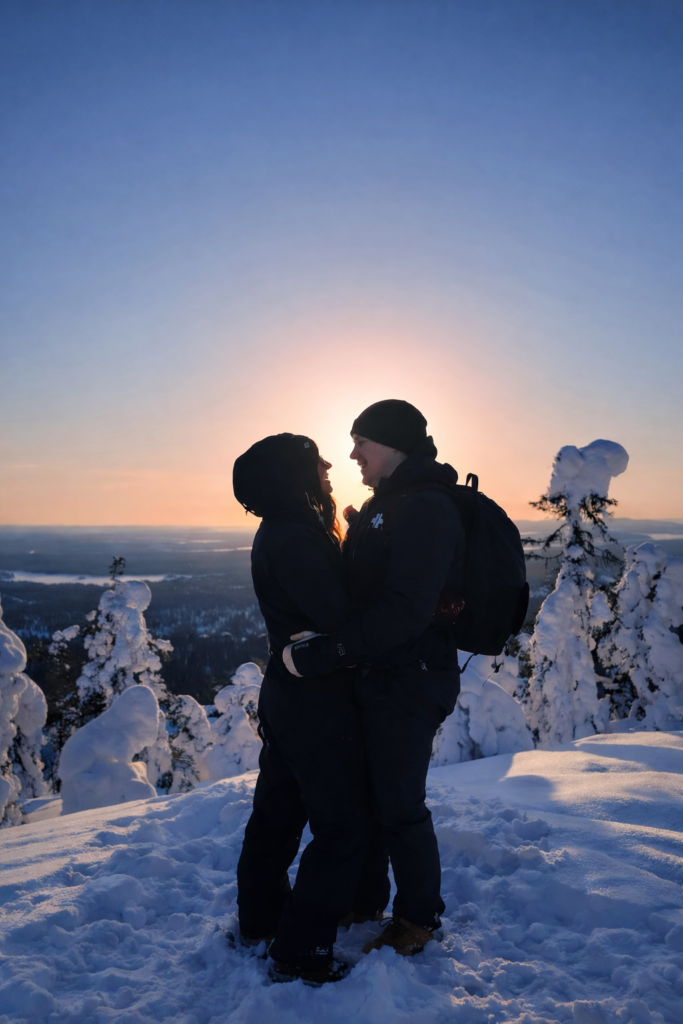
lapland locals in ruka kuusamo enjoying snowy view.

Finnish Perspective on Lapland

Someone once asked me how I feel about all this tourism and what it means to us Finns. It’s a fair question, because the Lapland most foreigners imagine is often very different from the one we carry in our hearts.

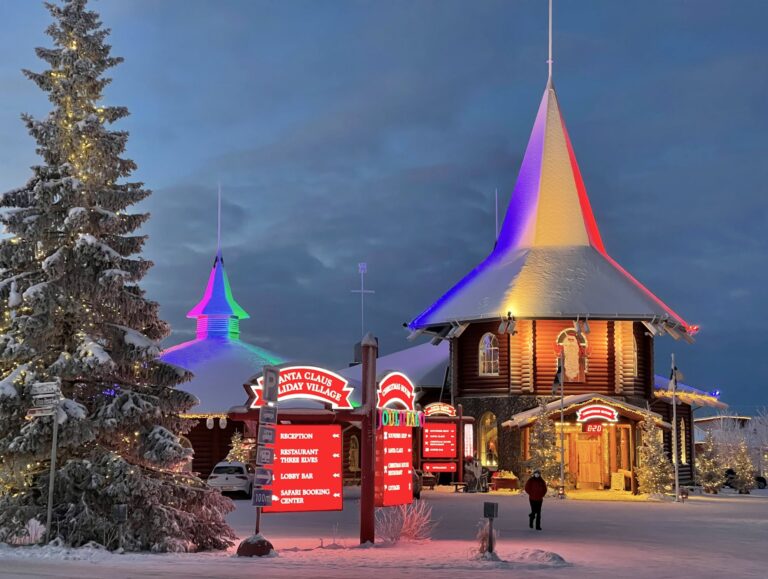
To many visitors, Lapland is Santa Claus, reindeer, husky rides, and neatly packaged winter experiences. And sure, those things exist. Families with small children might visit Santa’s Village once or twice, and snowmobiling is genuinely popular among Finns as well. Reindeer, of course, are a real part of Lapland life.

But for most of us, this isn’t what Lapland is primarily about. After all, in Finland Santa Claus doesn’t live in a theme park, he comes to everyone’s home personally on Christmas Eve. That’s the main thing about Christmas for us.

If I could choose one version of Lapland that every visitor would get to experience, it would be something very different. It would be untouched wilderness, silence, and tranquility.

It’s the moment when you sit by a campfire and hear the frost crackle in the trees. The northern lights suddenly dance across a star-filled sky. There are no other sounds. No flashing lights. No traffic, no crowds, no rush. Just darkness, snow, and peace.

After the hike comes one of the best parts: a hot sauna. Maybe ice swimming or rolling around in the snow afterward. Naked, of course. That’s the Finnish way